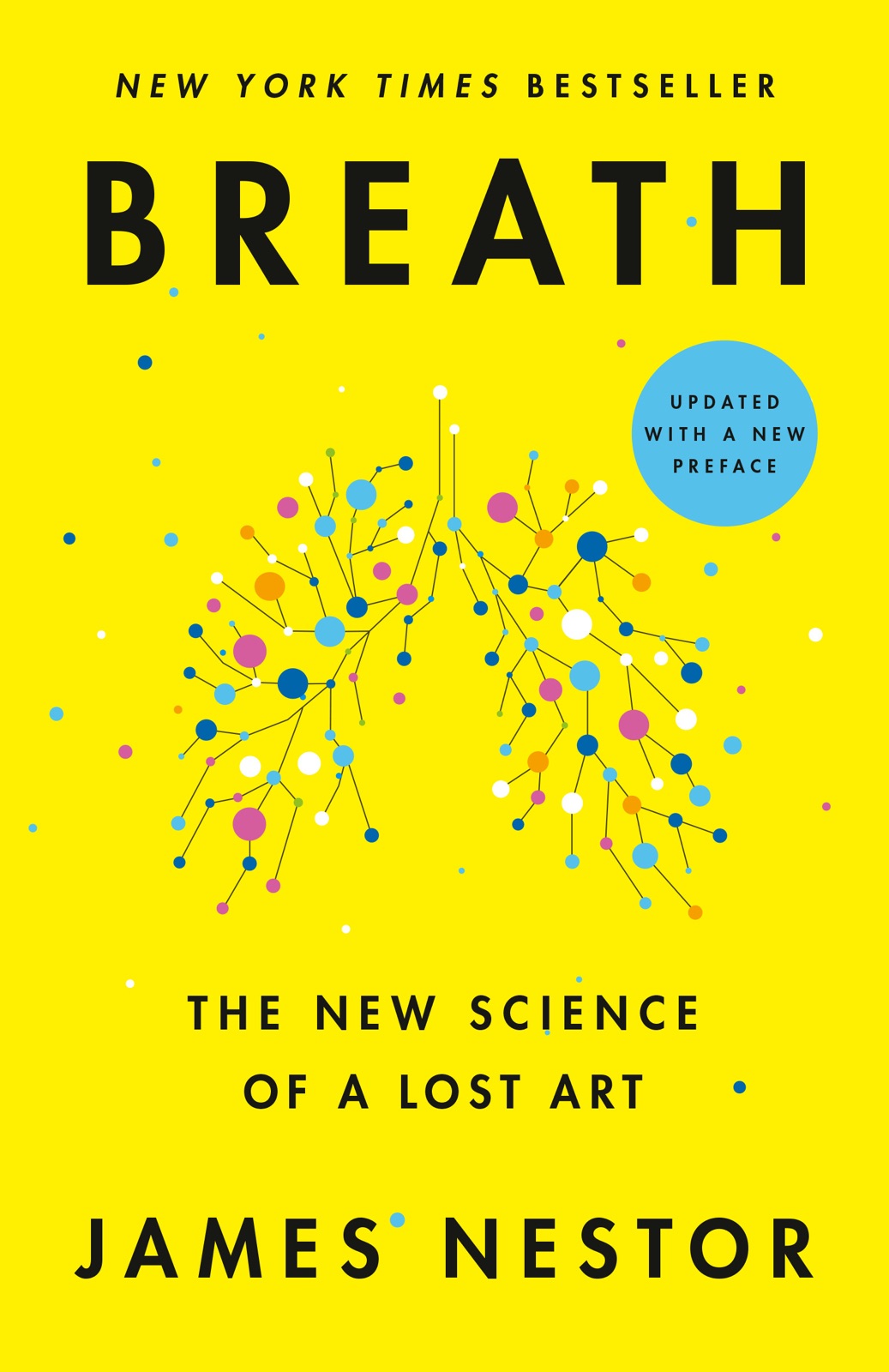
Breath
The New Science of a Lost Art
How you breathe, through the nose, slowly, less, quietly shapes your health and calm.
Core ideas
Most people breathe too fast and through the mouth, to their detriment.
Nasal breathing filters, humidifies, and improves oxygen uptake.
Slowing the breath to around 5.5 breaths a minute calms the nervous system.
Modern soft diets shrank our airways; breathing is a skill we can relearn.
Lessons from the book
The nose is not optional
Mouth breathing is an emergency system running as a default.
Nestor volunteered for an experiment where his nose was plugged for ten days, forcing mouth breathing. His blood pressure rose, sleep apnea appeared, and he snored within days. The nose, it turns out, is doing real work: filtering, humidifying, and releasing nitric oxide, which improves oxygen uptake in the lungs.
The fix is embarrassingly simple: keep the mouth closed, day and night, and let the nose do its job. Habitual mouth breathers often need to retrain gradually, and Nestor describes people taping their lips at night to force the switch. Within the book's many claims, this is the one with the firmest ground under it.
Slow down to five and a half
About five and a half breaths a minute is the rhythm your nervous system prefers.
Across traditions, Nestor notices a coincidence: monastic chants, rosary prayers, and yogic breathing all settle near the same cadence, roughly five to six seconds in and five to six seconds out. Researchers testing that rhythm found blood pressure dropping and heart rate variability, a marker of calm, rising.
The exhale is the lever. Breathing out slowly activates the parasympathetic brake, which is why sighing exists. You can use it on demand: before a difficult conversation or after a jolt of stress, a minute of long, slow exhales does measurable work. It is the cheapest calming tool you own.
Breathe less, not more
The urge to breathe is about carbon dioxide, and most of us over-breathe.
The counterintuitive chapter argues that the feeling of air hunger is driven by carbon dioxide levels, not oxygen, and that chronic over-breathing keeps CO2 too low, tightening blood vessels and feeding anxiety. The breathless feeling on a climb is partly a trainable tolerance, not a pure oxygen shortage.
Nestor's practical takeaway is gentler than the freediving stories around it: breathe lightly and quietly through the nose at rest, and let mild air hunger during easy exercise train your tolerance. This is the most debated part of the book, so treat it as an experiment on yourself rather than settled doctrine.
Our take
We came to this one skeptical of a whole book about breathing and left genuinely converted on the basics. Nestor's gonzo approach, including plugging his own nose for ten days as an experiment, makes a dry subject weirdly gripping, and the core advice (breathe through your nose, more slowly, less) costs nothing to try tonight.
It's a journalist's adventure rather than a clinical text, so a few claims run ahead of the hard evidence. Take the more dramatic bits with a pinch of salt. But the central, well-supported idea that how you breathe shapes your stress, sleep, and focus is worth the read, and you can start experimenting before you've finished the first chapter.
Is it for you?
Read it if
Anyone curious about a free, simple lever for stress, sleep, and focus.
Skip it if
Readers who want rigorously hedged science over an adventurous, anecdotal narrative.