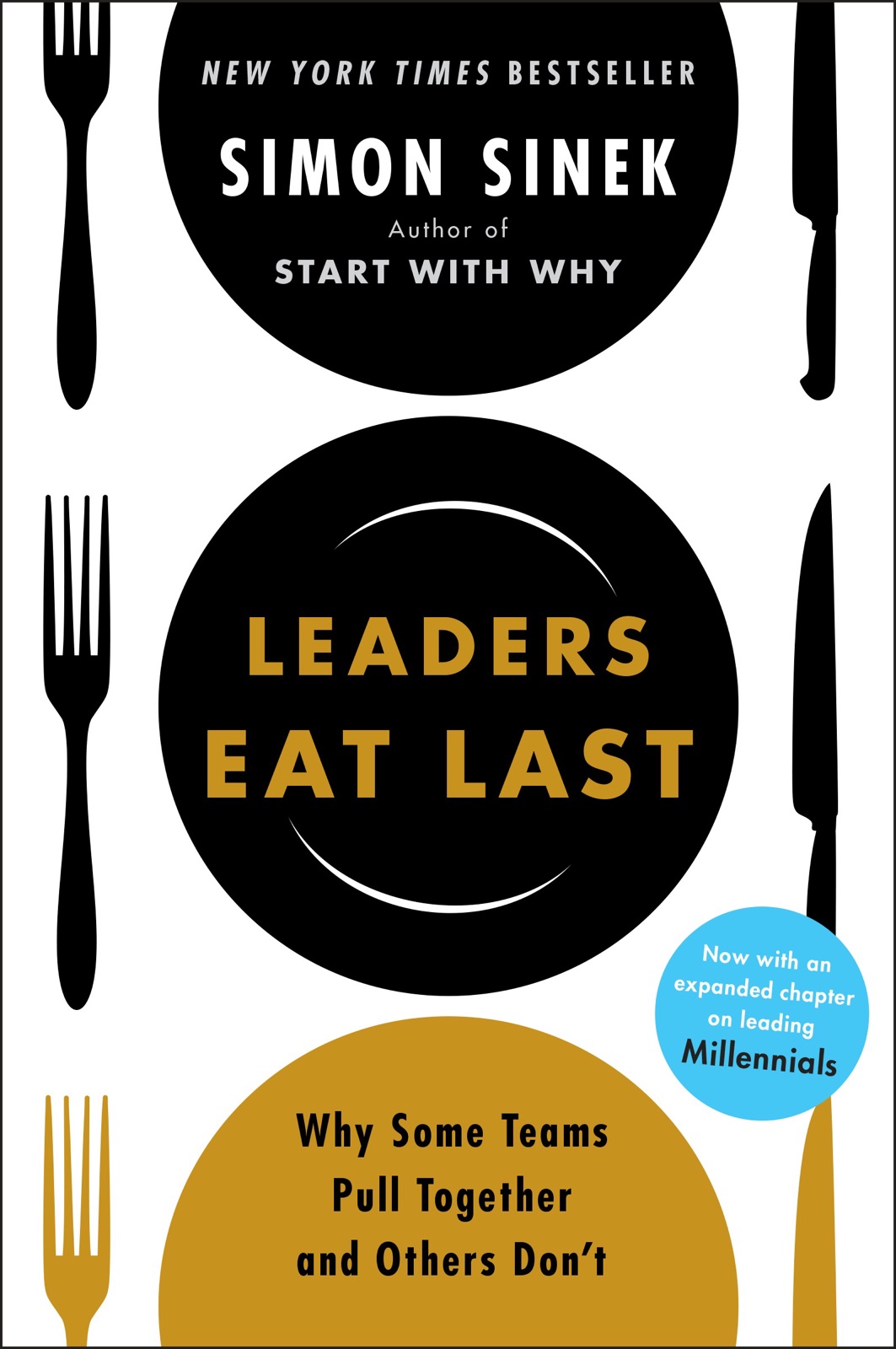
Leaders Eat Last
Why Some Teams Pull Together and Others Don't
Great leaders create a 'circle of safety' so their people can focus on the work, not on watching their backs.
Core ideas
Leadership is responsibility for the people in your charge, not rank or perks.
When people feel safe, the brain chemistry of trust and cooperation kicks in.
Short-term, numbers-first cultures erode the trust that makes teams resilient.
Real leaders sacrifice their own comfort for the good of those they lead.
Lessons from the book
The circle of safety
People can fight the outside threat or each other. Never both.
Every organisation faces danger from outside: competitors, markets, change. Sinek's observation is that when people also feel danger from inside, politics, layoffs by spreadsheet, blame, they spend their energy protecting themselves from each other, and the outside threat wins by default. Safety inside is what frees attention for the real fight.
Building the circle is mostly behavioural: leaders who take blame and share credit, who treat mistakes as information rather than ammunition, who visibly absorb risk on behalf of their people. The test is simple. Do your people spend more energy on the work, or on watching their backs?
Chemicals of us and them
Trust and cooperation have a biology, and short-term metrics starve it.
Sinek's chemical cast is a simplification, but the story it tells is useful. Achievement chemicals, the dopamine hit of hitting a number, are individual and addictive. Social chemicals, the oxytocin and serotonin of trust and belonging, are slow, built through sacrifice and time together, and they are what make groups resilient.
Organisations tuned entirely to quarterly numbers select for the first kind and starve the second, which is why they feel simultaneously high-performing and miserable. The leadership implication is patience: trust compounds like capital, is built in small deposits, and is spent in one bad decision.
Leaders eat last, literally
Rank buys the first serving. Leadership is choosing to take it last.
The title comes from the Marine Corps, where officers serve themselves after their troops as a matter of custom. The meal is trivial; the signal is not. It announces daily that rank means responsibility for others' welfare before your own comfort, and troops repay that signal with the kind of effort no bonus scheme buys.
Sinek's sharpest distinction is between authority and leadership. Plenty of people hold rank and eat first, and their people comply exactly as far as the job description requires. The ones we call leaders absorb cost, danger, and blame ahead of their people, and are followed places compliance would never go.
Our take
Sinek's real gift is a sticky metaphor, and the circle of safety is a good one: your job as a leader is to make people feel secure enough to do their best work instead of constantly guarding their backs. If you're a new manager looking for a humane north star, this hands you one.
The brain-chemistry framing, endorphins, oxytocin, cortisol and the rest, is simplified to the point that scientists wince, so we read it as motivational metaphor rather than neuroscience. Taken that way, the underlying message that leadership is responsibility, not privilege, is a genuinely good thing to absorb early in a career.
Is it for you?
Read it if
New and aspiring leaders who want a humane, biology-grounded model of trust.
Skip it if
Readers seeking operational tactics or a tightly argued management framework.