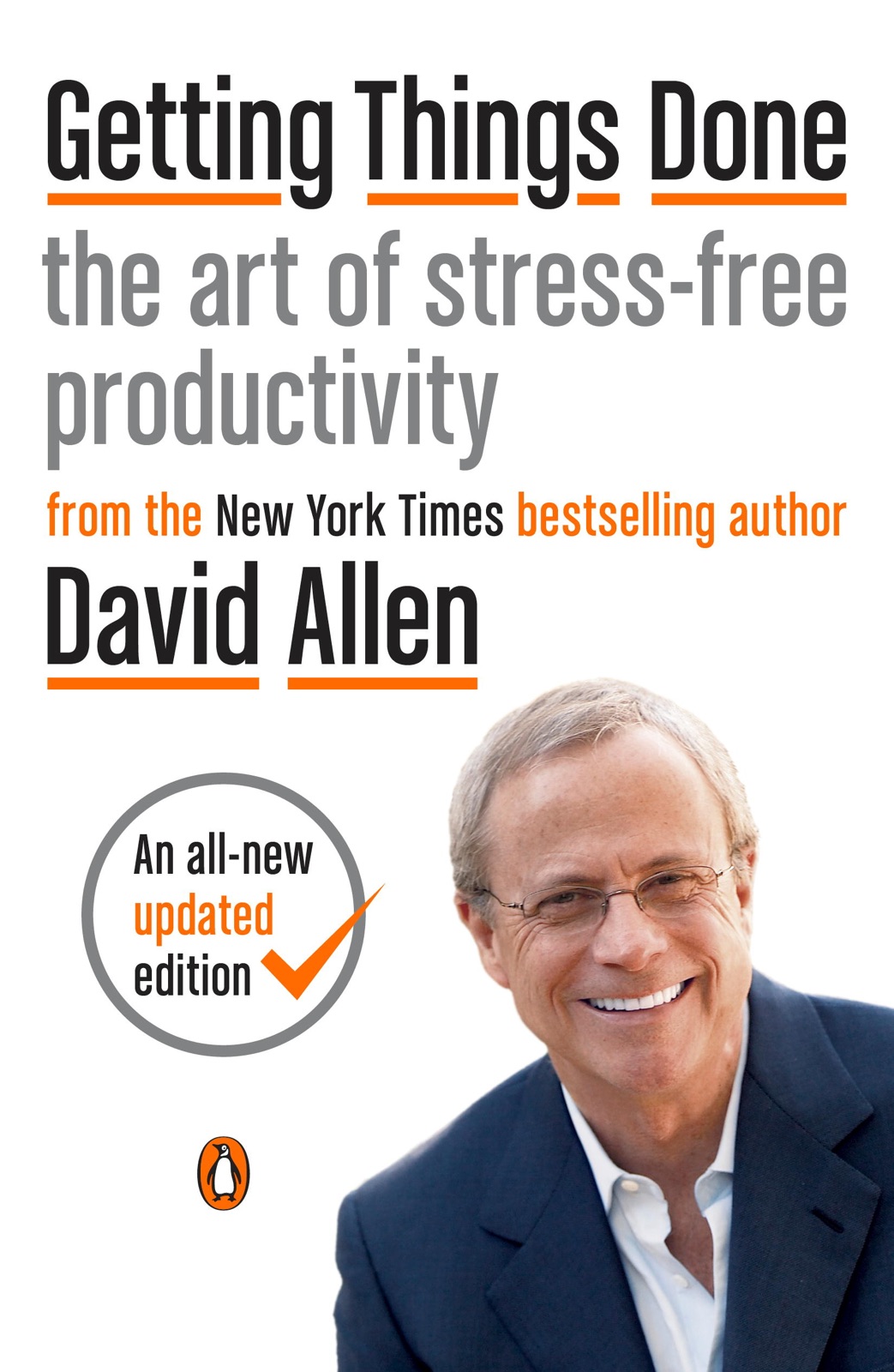
Getting Things Done
The Art of Stress-Free Productivity
The original 'capture everything' system for clearing your head and trusting your to-do list.
Core ideas
Your mind is for having ideas, not holding them. Capture every commitment in a trusted system.
Clarify each item into a concrete next action; ambiguity is what stalls you.
The two-minute rule: if it takes under two minutes, do it now.
Weekly reviews keep the system trustworthy enough that your mind can let go.
Lessons from the book
Capture everything
Open loops drain you whether or not you are working on them.
Allen's foundational claim is that your brain keeps rehearsing every unfinished commitment, from the strategy document to the lightbulb that needs replacing, and the rehearsal costs attention around the clock. Psychologists call it the Zeigarnik effect. He calls them open loops, and most people carry hundreds.
The fix is not to work harder but to write everything down in a place you check reliably. Everything: projects, errands, vague somedays. The relief is immediate and slightly eerie. Your mind stops tugging your sleeve once it believes the commitment is held somewhere that will not forget it.
The next physical action
Projects stall because nobody decided the very next visible step.
Plan the party sits on a list for weeks because it is not an action, it is a project wearing an action's clothes. Allen's discipline is to ask, for every commitment, what is the very next physical thing to do? Call the venue. Email Sarah for the guest list. Concrete actions get done; abstractions get postponed.
This sounds trivial and changes everything, because procrastination is usually unclarity in disguise. The dread attached to a vague task evaporates when it becomes a two-line phone call. Run the question over your stalled list once and watch how many immovable items were simply never translated into motion.
The weekly review
The system stays trusted only if you audit it, and trust is the whole point.
Once a week, Allen asks you to empty every inbox, walk every project list, and decide the next action for anything that moved. It is the least glamorous habit in the book and the one that decides whether the rest works. A list you no longer believe is current goes back to being noise.
The reward for the discipline is the mind like water state the book is famous for: relaxed readiness, because nothing is being tracked in your head. Skip the review and the loops quietly reopen. Keep it and the system pays for itself, usually within the hour it takes.
Our take
GTD is the granddaddy of personal productivity systems, and even if you never adopt the whole method, two ideas are worth stealing outright: get every commitment out of your head and into a place you trust, and always define the concrete next physical action. Just those two habits quiet a surprising amount of mental noise.
The full system is genuinely involved, contexts, weekly reviews, the works, and some people find the overhead heavier than the chaos it replaces. We'd start light: take the capture habit and the two-minute rule, and only go deeper if you feel the pull. It's a 2001 book, so mentally swap the paper inboxes for whatever apps you already live in.
Is it for you?
Read it if
People drowning in open loops who need a reliable system to organise commitments.
Skip it if
Minimalists who find elaborate systems more burdensome than the chaos they replace.