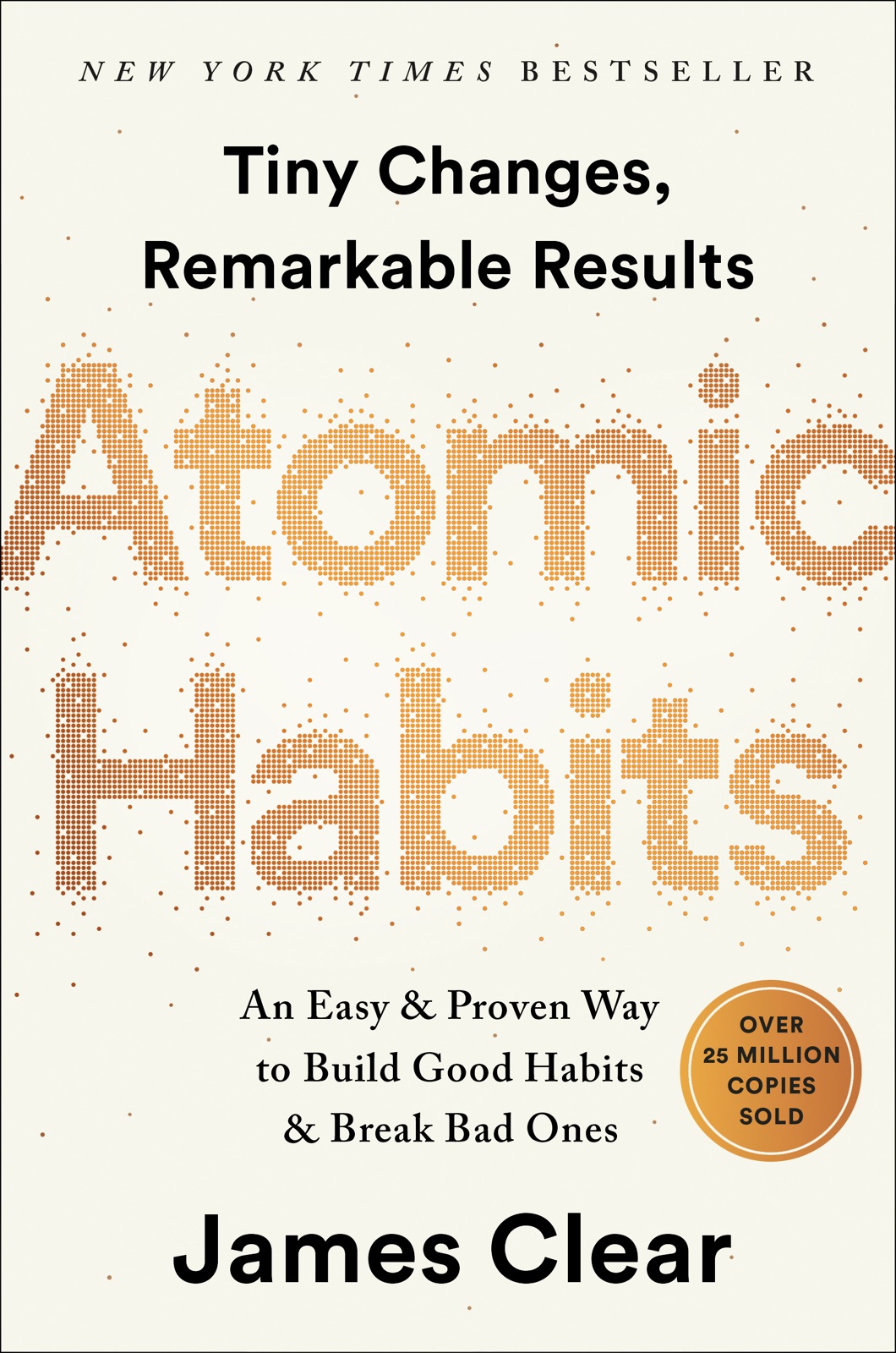
Atomic Habits
An Easy & Proven Way to Build Good Habits & Break Bad Ones
Tiny, consistent changes compound into remarkable results. The definitive practical guide to habit change.
Core ideas
One percent better every day compounds; habits are the interest on self-improvement.
Build habits with four laws: make it obvious, attractive, easy, and satisfying.
Focus on systems and identity (I am a runner), not just outcomes (I want to run).
Environment design beats motivation: shape the space so the right action is the easy one.
Lessons from the book
The compounding of one percent
Habits are the compound interest of self-improvement.
Improve by one percent a day and the maths says you end the year roughly thirty-seven times better. The number is less important than the shape: habits compound, in both directions. Tiny daily choices feel meaningless in the moment, which is exactly why people abandon them before the curve bends upward.
Clear calls the flat early stretch the valley of disappointment. Ice does not melt at minus one degree, and it does not melt faster at zero than the warming that came before deserved. Results lag effort. Knowing the lag exists is what lets you keep voting for the process while the scoreboard still says nothing.
Identity first
Every action is a vote for the kind of person you want to become.
Most habit attempts aim at outcomes: lose the weight, write the book. Clear inverts the order. Decide who you want to be, then prove it to yourself with small actions. Each workout is a vote for I am someone who trains. Enough votes and the identity hardens, and identities defend themselves without willpower.
This explains why the two-minute versions of habits matter more than they look. One pushup, one sentence, one page: trivial as outcomes, powerful as votes. It also explains relapse. Saying I am trying to quit keeps the old identity in charge. Saying I am not a smoker changes who is answering the question.
Design the environment, not the resolution
Make it obvious, attractive, easy, and satisfying, and the habit builds itself.
The four laws are a checklist for engineering behaviour. Make the cue obvious: the guitar on a stand, not in a case. Make it attractive: pair the habit with something you enjoy. Make it easy: shrink it to two minutes, remove steps. Make it satisfying: track it, and never miss twice.
Breaking a habit inverts each law: hide the cue, make it unattractive, add friction, remove the reward. Clear's deeper point is that the people with the best self-control use it least. They arrange their rooms, phones, and schedules so the good choice is the default and the bad one requires effort. Design beats discipline.
Our take
This is the book we reach for most when someone wants to actually change a behaviour, because it's relentlessly practical without being shallow. Clear's framing, you don't rise to your goals, you fall to your systems, turns willpower failures into design problems, which is oddly freeing once it clicks.
The identity idea is the part that sticks with us: aim to become the kind of person who runs rather than to run a marathon. Some of the science is simplified, and if you've read widely in this area a lot will feel familiar. But as a clear, usable toolkit you'll genuinely open again, it's very hard to beat.
Is it for you?
Read it if
Anyone wanting a concrete, science-backed toolkit for changing daily behaviour.
Skip it if
Readers seeking deep neuroscience rather than a clear, applied framework.