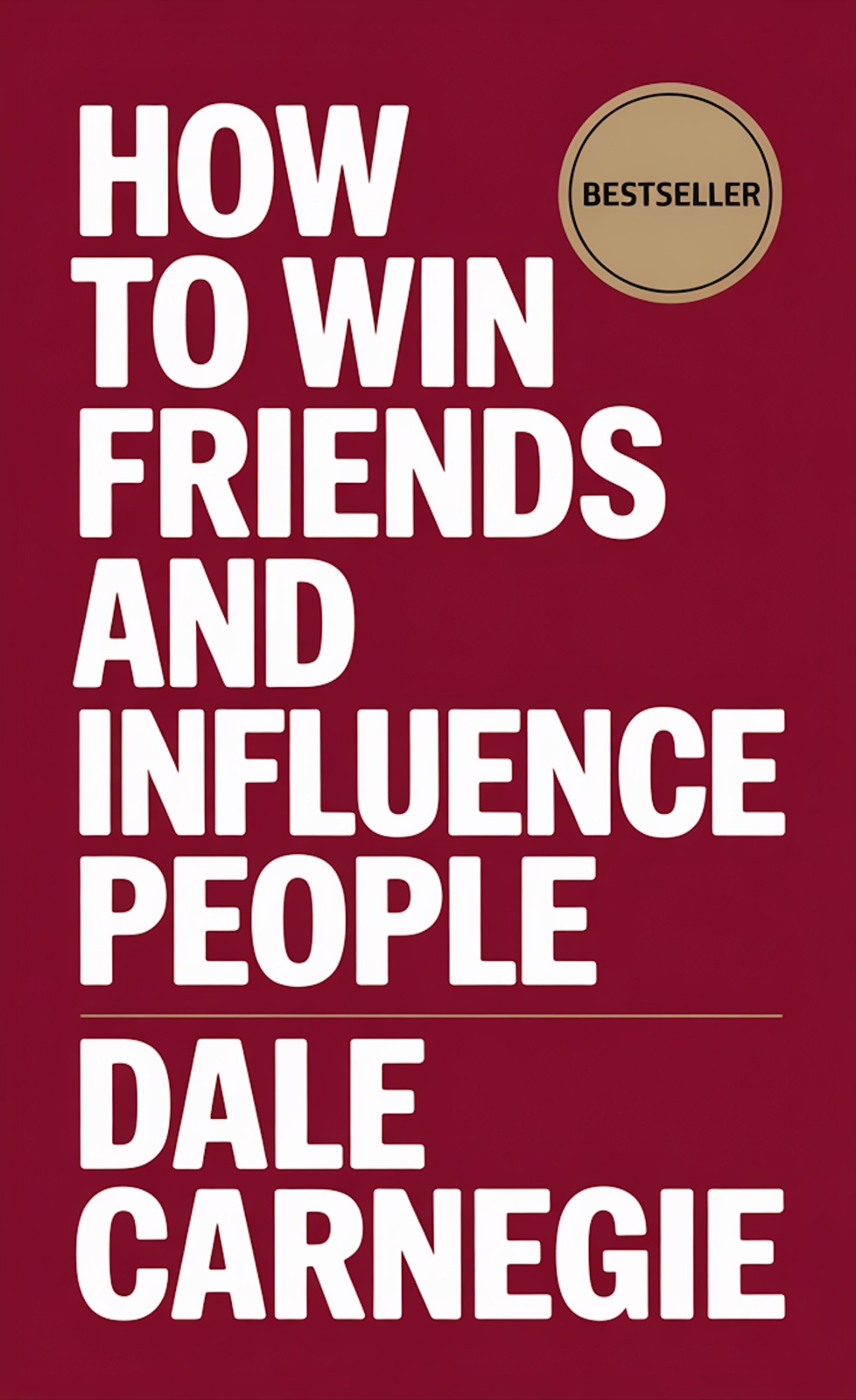
How to Win Friends and Influence People
The original manual on dealing with people, and still the best, nearly a century on.
Core ideas
Don't criticise, condemn, or complain: it only puts people on the defensive.
A person's name is, to them, the sweetest sound in any language.
Become genuinely interested in others and they'll become interested in you.
The only way to win an argument is to avoid it; let the other person save face.
Lessons from the book
Criticism doesn't work
People rarely blame themselves, and attacking them guarantees they never will.
Carnegie opens with gangsters and fraudsters who each considered themselves misunderstood public benefactors. His point is uncomfortable: almost nobody, however wrong, blames themselves. Criticism therefore does not correct; it wounds pride, triggers defence, and hardens the exact behaviour it targets.
His alternative is not silence but curiosity: try honestly to understand why they acted as they did, because there is always a reason that makes sense from inside. This first principle carries the whole book. Any fool can condemn, and most fools do. Understanding is rarer, and it is the only door that opens people.
Become genuinely interested
You make more friends in two months of interest than two years of trying to be interesting.
The counterintuitive engine of the book: influence comes not from impressing people but from being impressed by them. Remember names, because a name is the person's favourite sound. Ask about their interests and actually listen. Let them talk more than you do. Everyone's favourite subject is reliably themselves.
Carnegie's crucial word is genuinely. Feigned interest reads as technique and curdles into flattery. Real curiosity about people is a practice you can build, and it happens to be pleasant: the world is more interesting when you assume everyone knows something you don't. The social returns are almost a side effect.
Let them save face
Win the argument and you usually lose the person.
Carnegie is blunt about arguments: you cannot win one. Lose it and you lost; win it and you made the other person feel inferior, which they will remember longer than your logic. When you must change someone's mind, start with agreement, admit your own errors first, and let them discover the conclusion as their own idea.
Above all, protect dignity. Correct people privately, praise every improvement, and give them a reputation to live up to rather than a failure to live down. Face-saving sounds old-fashioned until you watch a meeting where someone was humiliated into agreeing. They agreed. Nothing they do afterwards will look like agreement.
Our take
It's nearly a century old and the examples are full of 1930s salesmen, but the fundamentals haven't aged a day, because people haven't changed. Don't criticise, make the other person feel important, take a genuine interest in them. It's almost embarrassingly simple, and most of us still don't actually do it.
The risk is reading it as a manipulation manual; done insincerely, the advice curdles into flattery and people can smell it. Read it instead as a nudge to pay real attention to other people, and it becomes one of the highest-return books here. We'd happily give it to a teenager and a CEO on the same afternoon.
Is it for you?
Read it if
Anyone who wants timeless, humane fundamentals of interpersonal skill.
Skip it if
Readers put off by a dated tone, or who mistake sincerity for flattery.