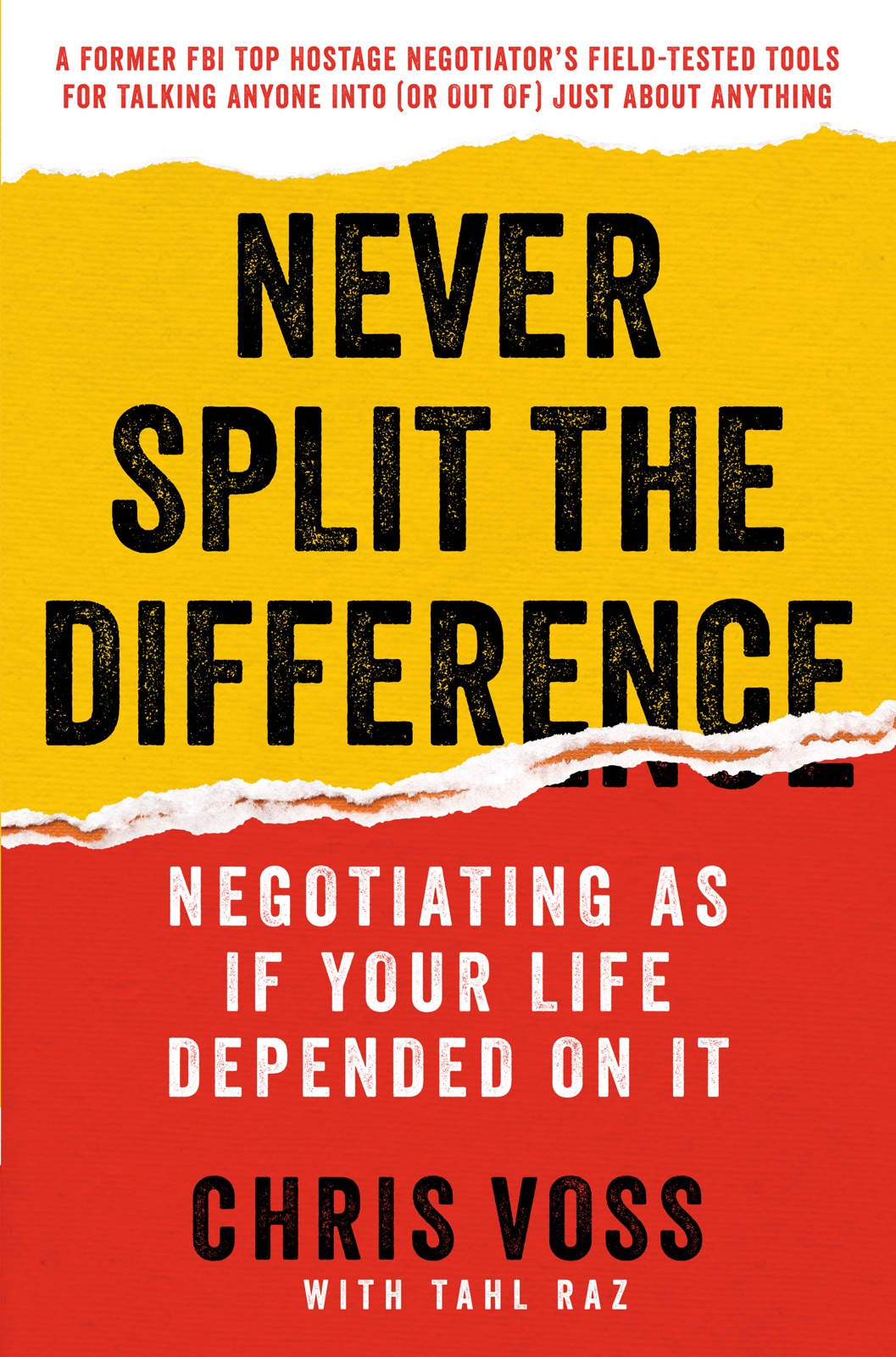
Never Split the Difference
Negotiating as if Your Life Depended on It
An FBI hostage negotiator's playbook for high-stakes conversations, grounded in empathy not logic.
Core ideas
Tactical empathy, labelling the other side's emotions, defuses and builds trust.
No is the start of negotiation, not the end; it gives people a sense of control.
Get to that's right, the moment they feel truly understood, before pushing.
Calibrated how and what questions make the other side solve your problem.
Lessons from the book
Tactical empathy and the label
Name the other side's feeling out loud and watch it lose half its charge.
Voss's foundation is tactical empathy: understanding the other side's emotional landscape and saying it back to them. The workhorse technique is the label. It seems like you're worried this deal makes you look bad. It sounds like you feel nobody's listening. No agreement, no judgment, just naming.
Labels work because being understood is disarming. Brain imaging suggests naming an emotion actually reduces its intensity, and in practice a good label makes people open up or correct you, and both are gold. Deliver it and then be quiet. The silence after a label is where the information arrives.
No is where negotiation starts
Pushing for yes raises defences. A safe no lowers them.
Everyone is trained to chase yes, which is why yes has become cheap: people say it to end conversations, then renege. No, by contrast, makes people feel safe and in control, and once they feel protected they can actually think. Voss often invites it deliberately: is now a bad time to talk?
One of his stranger tools follows from this: questions designed to elicit no that still move things forward. Have you given up on this project? forces engagement in a way that are you still interested? never does. Stop counting yeses in a conversation. Watch instead for whether the other side feels in control.
That's right, then how
First earn a that's right. Then let calibrated questions do your arguing.
The turning point in Voss's hostage cases was rarely a demand accepted. It was the moment the other side said that's right after hearing their own position summarised completely, the technique he calls a paraphrase plus label at full strength. That's right means they feel understood, and influence starts there, not before.
After it, stop pushing and start asking calibrated questions: open-ended, starting with how or what, that hand the problem over. How am I supposed to pay that price? What happens if we miss the deadline? Each one forces the other side to solve your constraint while feeling in charge. Illusion of control, real progress.
Our take
Written by a former FBI hostage negotiator, this is the most immediately usable communication book on our list. You can try its techniques in your very next conversation. Tactical empathy, labelling emotions, the late-night DJ voice, getting someone to say that's right: they sound like tricks, but they're really about making the other person feel understood.
Some readers find the tactics a little manipulative-sounding, and used cynically they could be. We read them instead as tools for lowering the temperature and actually hearing each other, which works as well at home as in a salary negotiation. It's also just a fun read, packed with genuine stories from the other end of a phone line.
Is it for you?
Read it if
Anyone who negotiates salaries, deals, or daily conflicts , which is everyone.
Skip it if
Readers expecting academic negotiation theory rather than field-tested tactics.