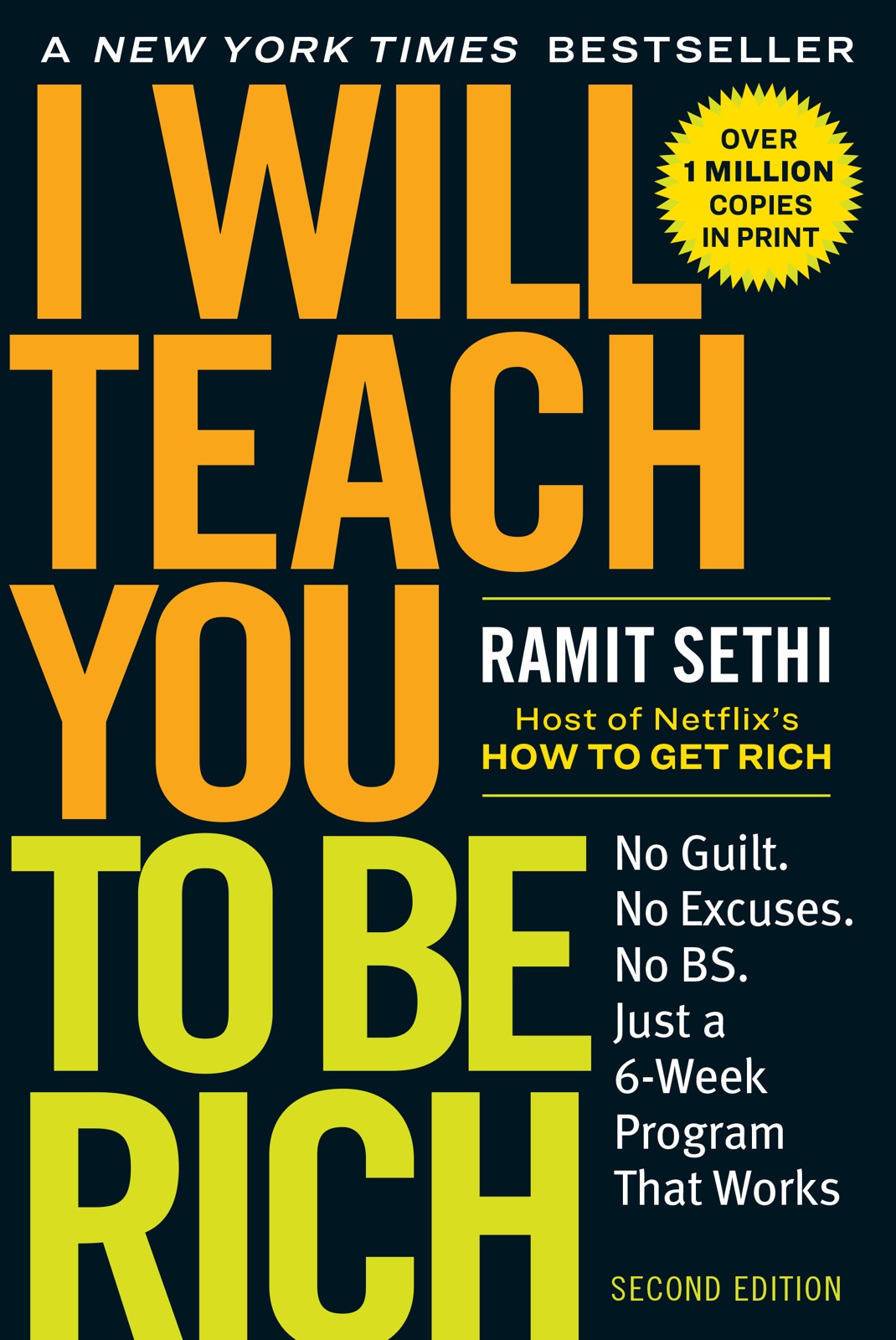
I Will Teach You to Be Rich
No Guilt. No Excuses. No B.S. Just a 6-Week Program That Works
The clearest, most actionable system for automating your money in your twenties and thirties.
Core ideas
Automate the flow: bills, savings, and investing happen before you can spend the money.
Spend extravagantly on what you love, cut costs mercilessly on what you don't.
Low-cost index funds beat picking stocks for almost everyone, almost always.
Big wins (banking, investing, rent) matter far more than skipping lattes.
Lessons from the book
The automation machine
Money that moves itself cannot be spent by accident.
Sethi's core move is plumbing. Salary lands, and within a day, fixed percentages flow automatically: retirement account, savings goals, investments, then bills. Whatever remains in checking is genuinely spendable. No monthly willpower, no budgeting-app guilt, no decision fatigue. The system decides once so you never have to decide again.
The deeper point is that discipline is a design problem. People who save reliably are not more virtuous; they have removed the choice. An hour spent wiring up transfers does more for your net worth than a year of trying to be careful, because the machine does not have bad weeks.
Conscious spending, not budgets
Cut ruthlessly on what you don't care about so you can spend loudly on what you do.
Sethi dislikes budgets for the same reason diets fail: all restriction, no joy. His alternative is a conscious spending plan. Pick the one or two categories that genuinely light you up, eating out, travel, gear, whatever it is, and fund them generously. Then cut the categories you barely notice down to nothing.
The test is whether your spending matches your stated loves. Most people leak money evenly across everything, subscriptions, convenience fees, upgrades, and still feel deprived. Concentrating the money where you actually feel it turns the same income into a noticeably better life.
Chase the big wins
Get five decisions right and the lattes stop mattering.
Personal finance media obsesses over small sacrifices, but the arithmetic lives elsewhere. Your rent, your salary negotiations, your investment fees, your debt interest, and your automated savings rate dwarf everything else. A single good negotiation or a refinanced loan is worth ten thousand skipped coffees.
Sethi's advice is to spend your finite attention where the numbers are big: negotiate salary every cycle, keep fund fees near zero, get the housing decision right. Then buy the latte without guilt. Optimising small pleasures while ignoring five-figure decisions is the most common way to lose the game politely.
Our take
Look past the loud title. This is the most practical just-tell-me-what-to-do money book we know. Sethi hands you an actual six-week checklist: which accounts to open, how to wire them together, what to safely ignore. If you're in your twenties or thirties and your finances feel like a low hum of guilt, this turns them into a system you set up once and mostly forget.
His best idea is permission rather than restriction: spend extravagantly on the few things you genuinely love, and cut everything else to the bone. We find that far more livable than apps that nag you about your coffee. The tone is brash and occasionally dated, but the advice is solid and the automation chapter alone earns its place.
Is it for you?
Read it if
Beginners who want a concrete six-week setup rather than philosophy.
Skip it if
Experienced investors already running automated, index-based finances.