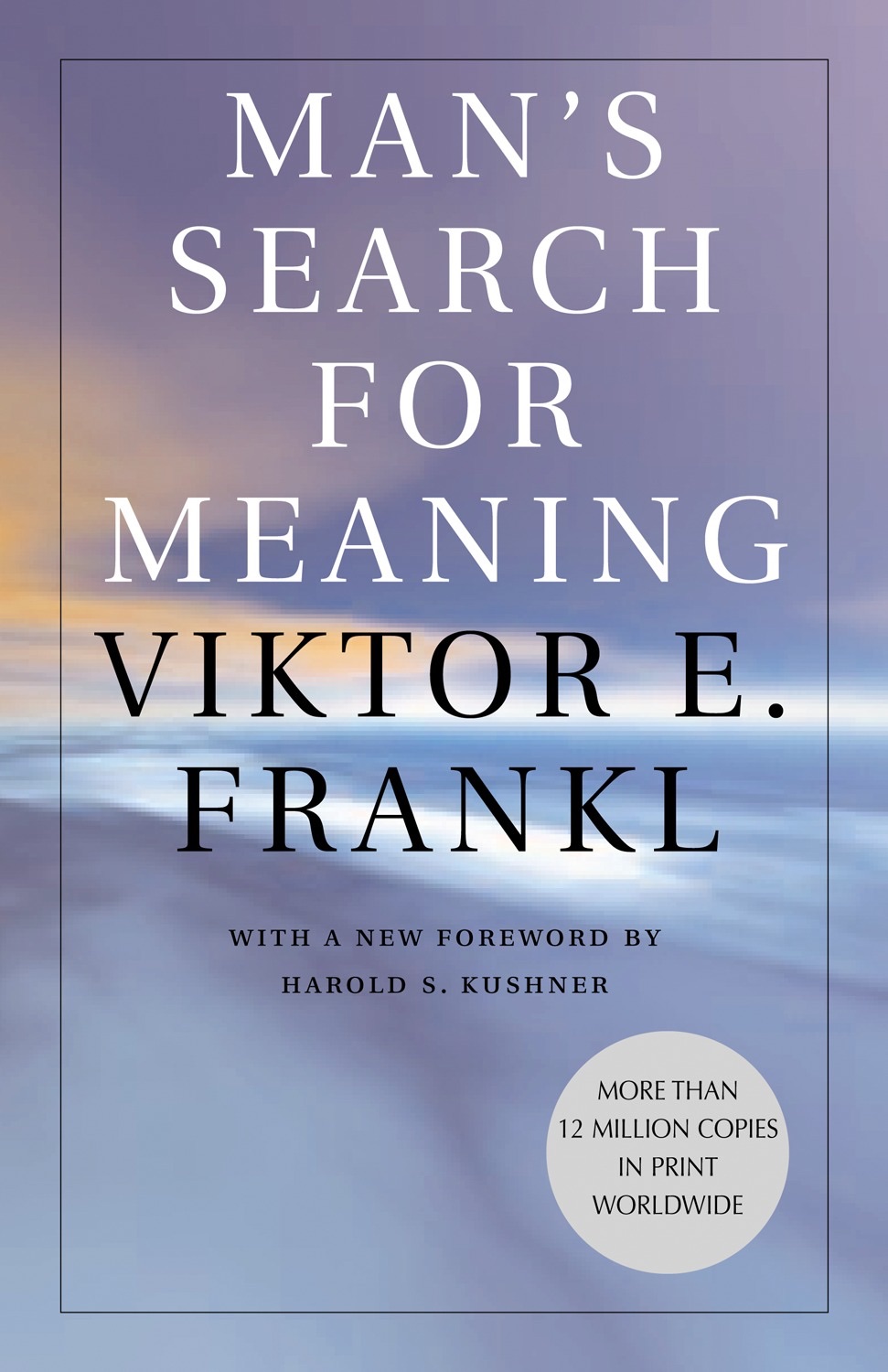
Man's Search for Meaning
A Holocaust survivor's argument that we can endure almost any 'how' if we have a 'why'.
Core ideas
When we can't change a situation, we are challenged to change ourselves.
Meaning, not pleasure or power, is the primary human drive.
The last of human freedoms is to choose one's attitude in any set of circumstances.
Meaning is found in work, in love, and in the courage we bring to unavoidable suffering.
Lessons from the book
The last human freedom
Everything can be taken except the choice of how to respond.
Frankl's observation from inside the camps was that even there, some people retained a space between what happened to them and what they did next: sharing bread, comforting others, keeping an inner life. Everything else had been taken. The choice of stance had not, and he came to see that space as the final, unremovable freedom.
He is careful not to romanticise. Circumstances were overwhelmingly determinative, and survival mostly luck. The point is narrower and stronger: in whatever margin exists, the response remains yours. Between stimulus and response there is a space, and character is what you do inside it. Later writers built entire systems on that sentence.
Meaning over pleasure
Humans can endure almost anything if it means something.
Against Freud's pleasure drive and Adler's power drive, Frankl proposed that the deepest human motivation is meaning. In the camps, he watched those with a why, a person to return to, a work to finish, outlast physically stronger prisoners who had lost theirs. Despair, he concluded, is suffering without meaning.
Logotherapy, the school he founded, finds meaning in three places: creating or accomplishing something, loving someone, and the stance taken toward unavoidable suffering. Note what is absent: comfort, status, mood. Meaning is not found by asking what you want from life, but by hearing what life is asking of you.
Suffering with a purpose
When suffering cannot be avoided, the task becomes carrying it well.
Frankl is precise about scope: avoidable suffering should be avoided, and enduring it needlessly is masochism, not meaning. His teaching concerns the suffering that cannot be removed, illness, loss, fate. There, the question shifts from why me to what now, and dignity in the carrying becomes the achievement.
He tells of a grieving doctor who could not survive his wife's death until Frankl asked what she would have suffered had he died first. The pain gained a purpose: he was bearing it in her place. Nothing changed except the meaning, and the meaning changed everything. That is the book in miniature.
Our take
This is a short book that carries more weight than almost anything else on these shelves. The first half is Frankl's account of surviving the concentration camps; the second is the therapy he built out of it. We'd gently suggest reading the first half slowly. It's harrowing, and it's essential to what follows.
His central claim, that you can be stripped of everything except the freedom to choose your response, lands very differently once you know he lived it. It isn't a tidy self-help program, and it shouldn't try to be. But for anyone facing real hardship, or simply asking what makes a life meaningful, few books offer more in so few pages.
Is it for you?
Read it if
Anyone facing hardship or asking what makes a life worth living.
Skip it if
Readers wanting a practical self-help program rather than a profound testimony.