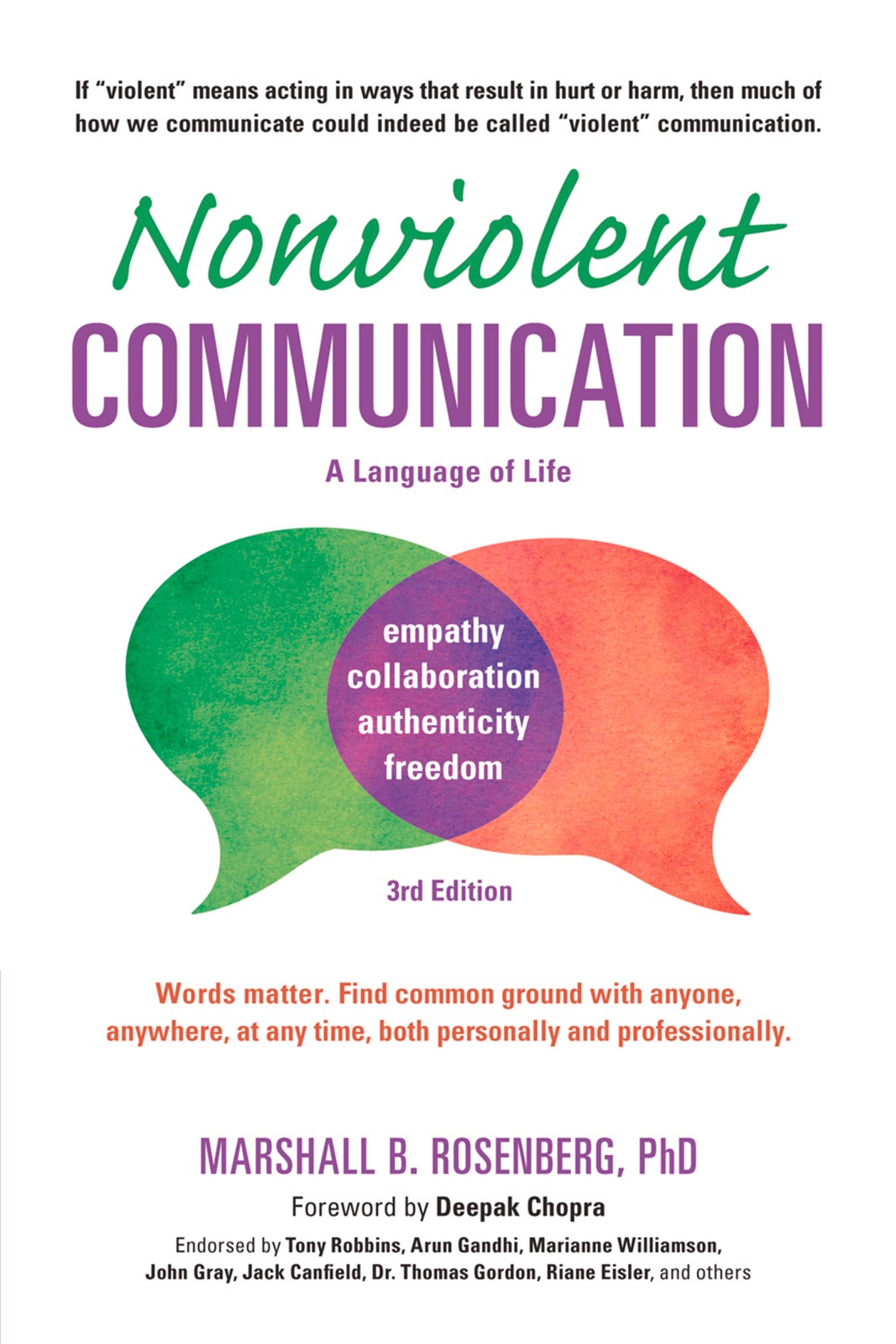
Nonviolent Communication
A Language of Life
Behind every judgment is an unmet need. Learning to say the need changes the conversation.
Core ideas
Four steps carry the method: state the observation, name the feeling, connect it to a need, make a clear request.
Judgments and criticisms of others are tragic expressions of our own unmet needs.
Separate observations from evaluations. You are always late is an attack; you arrived at 9:40 is a fact.
Empathy means being present with someone's feelings and needs, not fixing, advising, or one-upping.
Lessons from the book
The four steps
Observation, feeling, need, request. In that order, without editorial.
The method is a sequence. First, describe what happened as a camera would see it, with no evaluation attached. Second, name what you feel in one word, not a disguised accusation like I feel ignored. Third, connect the feeling to the need underneath it. Fourth, make a specific, doable request rather than a demand.
When you left the dishes for the third night, I felt frustrated, because I need to feel we share this home. Would you be willing to take Tuesdays? It sounds mechanical written down, and in a real conversation the structure is what keeps blame out of your mouth. Blame is the thing that makes the other person stop hearing you.
Judgments are needs in disguise
Every criticism you speak or receive is a clumsy report of an unmet need.
Rosenberg's deepest claim is that moralistic judgment, calling someone lazy, selfish, or inconsiderate, is a tragic way of saying, I have a need that is not being met. Tragic because it hides the need behind an insult, and the other person answers the insult instead. The conversation becomes a court case nobody wins.
The move that changes everything is translation. When you hear yourself judging, ask what you actually need. When someone attacks you, listen through the words for the need behind them. He is not asking you to accept bad behaviour, only to aim the conversation at the thing that can actually be resolved.
Empathy is presence, not problem-solving
When someone is hurting, your advice is an interruption.
Rosenberg lists the ways we deflect other people's pain while meaning well: advising, one-upping, educating, consoling, correcting. Each one moves attention away from the speaker just when they most need to be heard. Empathy, in his method, is staying with their feelings and needs until they feel understood.
The practical test is patience. Reflect back what you hear, guess at the feeling and the need, and wait. People signal when they have been fully heard: the body loosens, the voice drops, the repetition stops. Only then is anything you suggest worth saying, and half the time no suggestion is needed at all.
Our take
The title puts people off and the method can sound like a therapy workshop script. Stay with it anyway. Rosenberg's four steps, observation, feeling, need, request, are the clearest procedure we know for saying a hard thing without starting a war, and for hearing an attack as the need it is failing to express.
This is a practice book, not an idea book. Reading it takes an afternoon; applying it takes months of catching yourself mid-blame. It pairs unexpectedly well with Never Split the Difference. Voss teaches you to hear the other side in a negotiation, Rosenberg teaches the same at home, where the stakes compound daily. The chapters on marriage and parenting alone justify it.
Is it for you?
Read it if
Anyone whose important relationships keep hitting the same walls of blame, defensiveness, and silence.
Skip it if
Readers who want punchy negotiation tactics. The method is slow, earnest, and takes real practice.