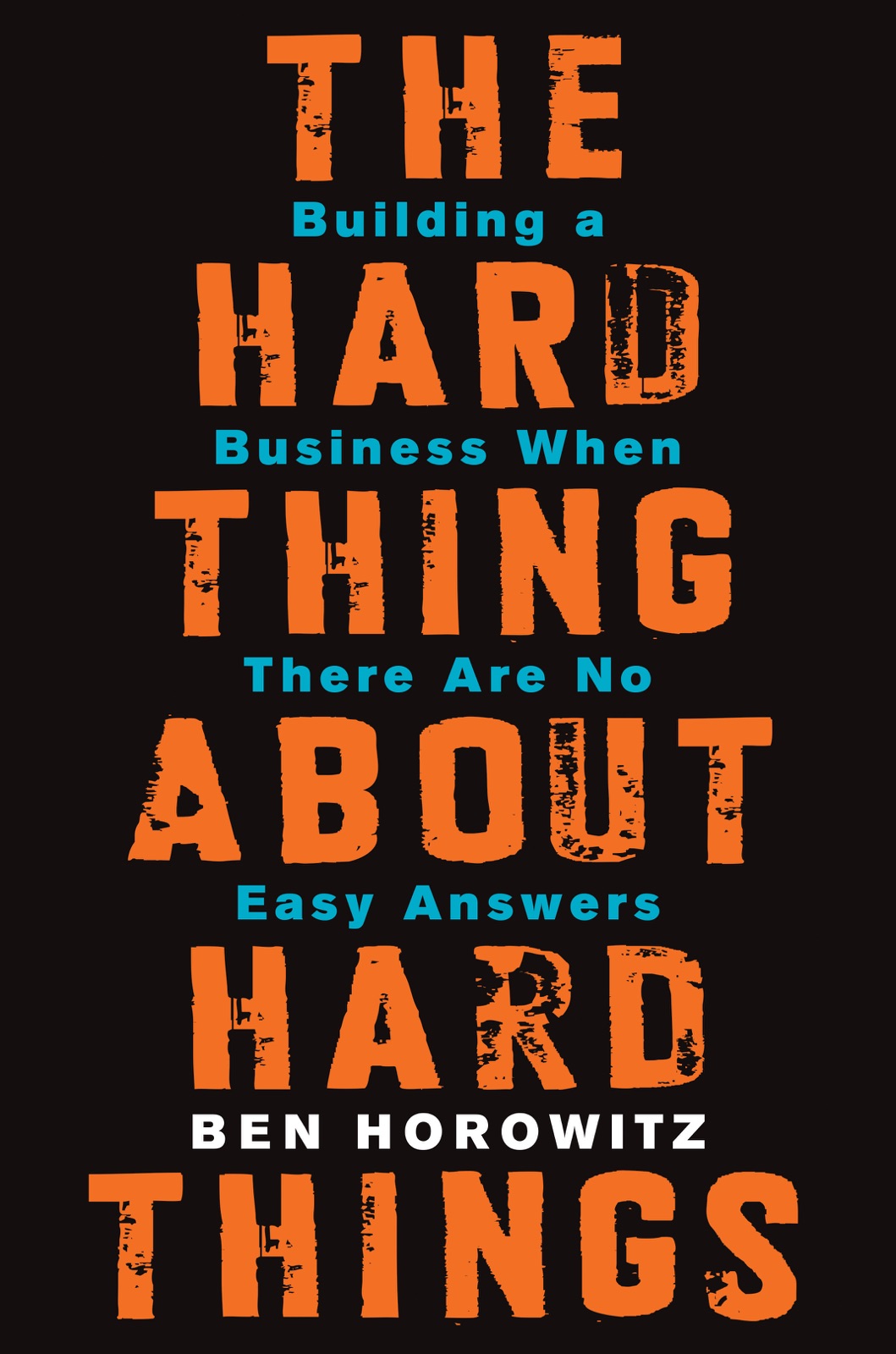
The Hard Thing About Hard Things
Building a Business When There Are No Easy Answers
An honest, battle-tested account of the brutal decisions leadership actually demands.
Core ideas
There are no recipes for the hardest calls, only judgment under pressure.
Take care of people, products, and profits, in that order.
Lead through the struggle: layoffs, near-death, and impossible trade-offs.
Hire for strength, not lack of weakness; manage your own psychology first.
Lessons from the book
The struggle has no recipe
When there is no good move, the job is choosing the least bad one and owning it.
Horowitz names the thing most business books skip: the struggle. Revenue collapsing, payroll uncertain, the moment you realise nobody is coming to save you. His companies survived the dot-com crash by inches, and his account of it is the rare founder story that keeps the fear in.
His comfort is unsentimental. Everybody who has built something has been there, there is always a move, and your job is to find it without flinching from how bad things are. Courage, in his telling, is not the absence of fear but making the right call while terrified. The chapter titles alone tell you he means it.
People, products, profits, in that order
Get the order wrong and you eventually lose all three.
The ordering is a priority stack for hard trade-offs. Taking care of people means training, honest feedback, and firing well when it comes to that; Horowitz argues a good place to work is the only durable edge when everything else goes sideways. Products come next because they are what people build. Profits follow or they don't.
His most concrete advice lives in the worst moments: lay people off quickly, honestly, and in person; tell the truth about why; and remember the people watching are the ones who stay. Companies survive bad quarters. They rarely survive employees concluding that leadership lies under pressure.
Manage your own psychology
The CEO's hardest report is the one in the mirror.
Horowitz calls managing your own psychology the hardest skill of the job. The highs and lows are violent, nobody inside the company can be your confidant about the scariest problems, and the loneliness compounds every other difficulty. He nearly cracked more than once and says so plainly.
His coping list is practical: write the fears down to get them out of your head, find peers or mentors outside the company who have lived it, separate the decision from the dread, and keep moving. The insight underneath is that composure is a discipline you practise, not a temperament you are issued.
Our take
Most leadership books tell you what to do when things go well. Horowitz writes about the 3am decisions when there's no good option left, layoffs, demotions, near-bankruptcy, and he's refreshingly blunt that there's simply no formula for them. For founders in the thick of it, that honesty is a real relief.
It's part memoir, part hard-won advice, and it never pretends to be a tidy framework. If you want structured management theory, look elsewhere; if you want someone who's been through the wringer telling you the truth about how it feels and what he learned, this is it. We'd hand it to any first-time CEO without hesitation.
Is it for you?
Read it if
Founders and executives facing the unglamorous, painful side of leadership.
Skip it if
Readers wanting tidy frameworks rather than war stories from the trenches.