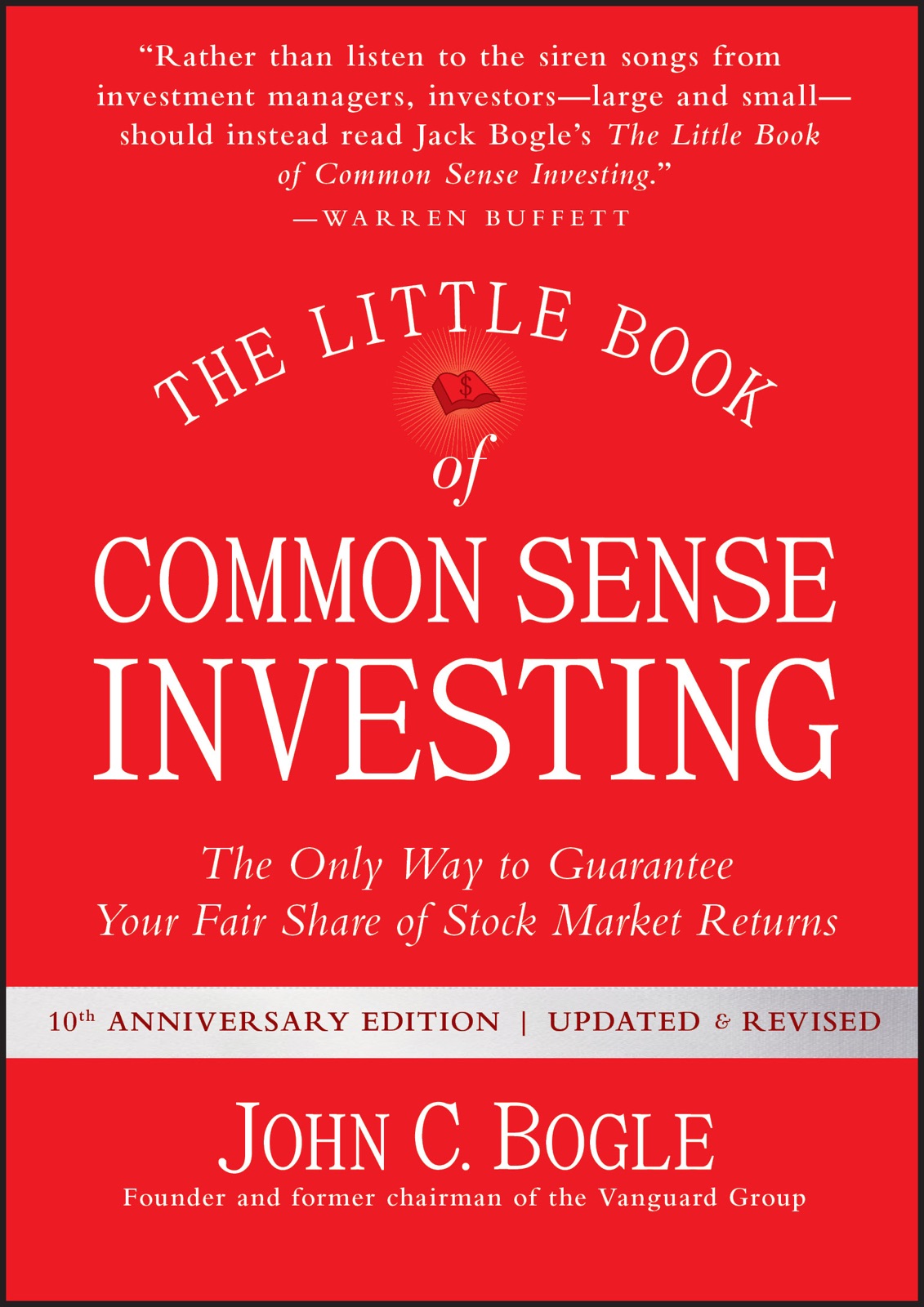
The Little Book of Common Sense Investing
The Only Way to Guarantee Your Fair Share of Stock Market Returns
The clearest case for owning the whole market cheaply instead of trying to beat it.
Core ideas
Owning every big company at once, through a low-cost index fund, beats trying to pick winners for most people over the long run.
Costs are the one thing you can control, and small yearly fees quietly eat a huge share of your returns over decades.
As a group, investors cannot beat the market, because they are the market, so the average active investor must lag it after costs.
Last year's hot fund is usually next year's disappointment, because strong runs tend to fade back towards the average.
Lessons from the book
The cost of the middlemen
The market hands out a return; the people who manage your money take a slice before you see it.
Bogle's central idea is simple. The businesses in the stock market throw off real returns through profits and dividends. That is the pie. But investors do not eat the whole pie. Between them and the market sit fund managers, brokers and advisers, all charging fees for their work. Whatever those middlemen take, the investors keep less. Bogle calls this the humble arithmetic of investing, and it holds no matter how clever anyone is.
This is why he distrusts the active fund industry as a group. Active managers trade often, hire researchers and charge more, so their combined costs are high. Those costs do not vanish. They come straight out of what investors would otherwise have earned. An index fund does almost none of that trading and hiring, so its costs are tiny. Same market, but you keep far more of what it produces.
How small fees become large sums
A fee that sounds trivial each year quietly compounds into a fortune given away.
A one or two percent yearly fee sounds like nothing. Bogle's point is that it does not stay small, because you pay it every single year on your whole balance, not just on your gains. Over a long working life the same money could have kept growing. Instead a slice is skimmed off annually, and the growth that slice would have earned is gone too. He calls this the tyranny of compounding costs, and it is the mirror image of compounding returns.
The direction is the part to remember. Over several decades, a difference of a percentage point or two in yearly cost does not shave a percent or two off your final pot. It can quietly consume a large fraction of it. The fund company earns a steady fee whatever happens. You carry all the market risk. Bogle's fix is to make the fee you pay as close to zero as you sensibly can.
Why last year's winners fade
Chasing the fund at the top of the table is how most people buy high and sell low.
Every year some funds post dazzling numbers, and money pours in to chase them. Bogle warns this rarely ends well. Strong performance tends to drift back towards the average over time, a pattern he calls reversion to the mean. A fund that shot ahead often does so through luck or a run in one corner of the market, and that run cools. The star of one decade is frequently ordinary or worse in the next.
So the money that arrives late, after the good years are already in the record, tends to buy in near the top and suffer the fade. This is why Bogle is sceptical of picking funds by their past returns. The whole market, held cheaply and left alone, sidesteps the guessing game entirely. You are not betting on which manager stays hot. You are simply owning the average, at low cost, and letting time do the work.
Our take
We rate this as the best short book on what to actually do with your money. Bogle is not selling a clever system. He is telling you to buy the whole market, keep your costs near zero, and then leave it alone, which turns out to be the hardest advice to follow precisely because it is so plain. He founded Vanguard and built the first index fund for ordinary people, so this is the argument of someone with nothing left to prove and no product to push on you.
The honest caveat is that it says one thing and says it many times. If you already believe in index funds, whole chapters will feel like a sermon you have heard, and the constant swipes at the fund industry can grate. It is also very American in its examples and tax talk, so readers elsewhere will need to translate the details. None of that changes the core lesson. It just means you can absorb the point in an afternoon and skim the rest.
Is it for you?
Read it if
Read it if you want a simple, defensible plan for your savings and have no wish to spend your life researching stocks.
Skip it if
Skip it if you already index by default, or if you actively enjoy stock-picking and accept the odds are against you.