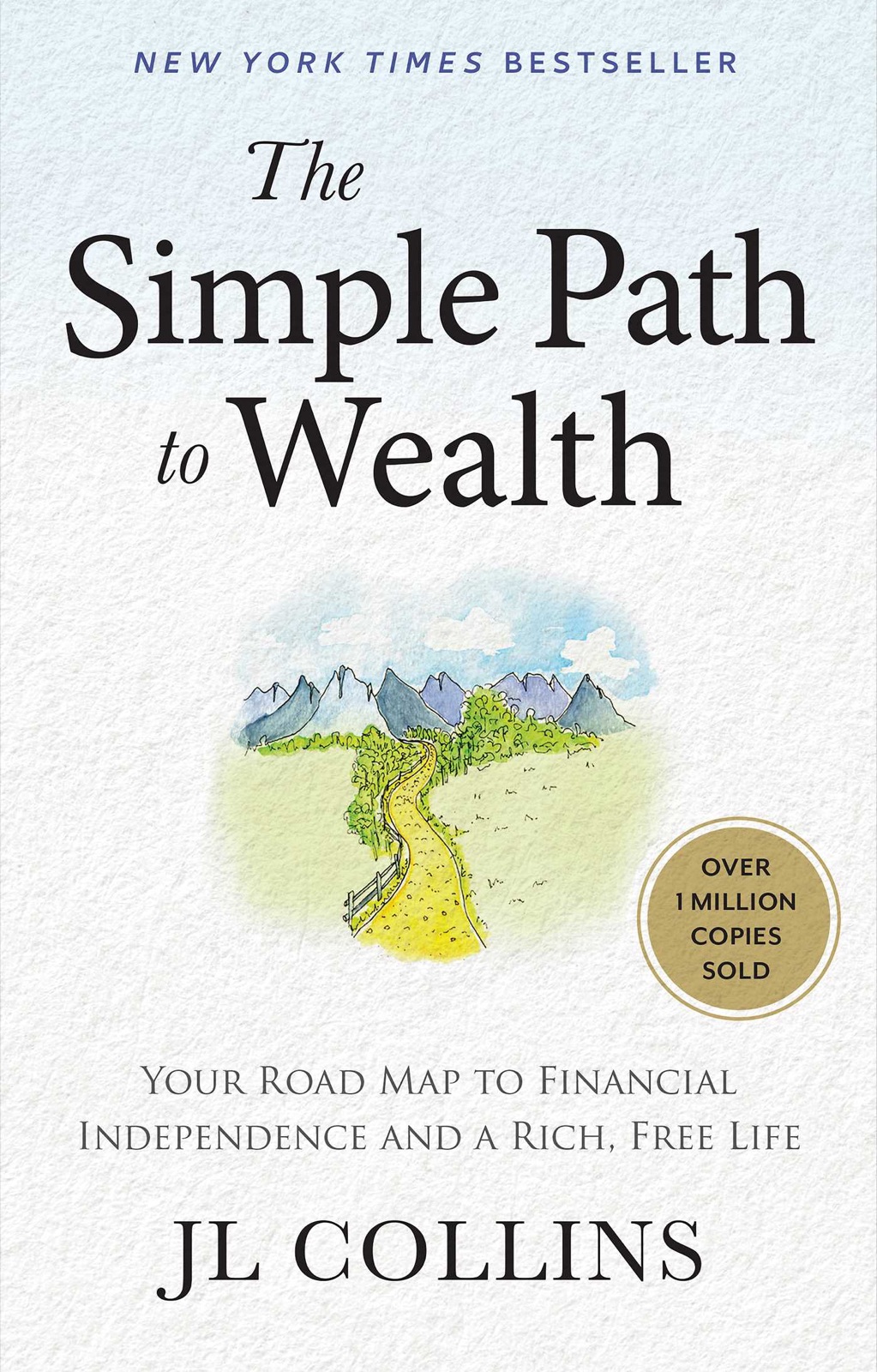
The Simple Path to Wealth
Your Road Map to Financial Independence and a Rich, Free Life
Index funds, a high savings rate, and patience: the whole of sensible investing in one calm book.
Core ideas
Spend less than you earn, invest the difference in a broad index fund, and leave it alone.
F-you money buys freedom long before retirement does. Start building it now.
Market crashes are normal weather, not emergencies. The plan already accounts for them.
Complexity in investing usually serves the people selling it, not you.
Lessons from the book
The index card version of investing
Save a big share of your income, buy a total market index fund, and leave it alone.
The whole system fits in a sentence: live on less than you earn, put the difference into a broad, low-cost index fund, and let time do the compounding. There is no stock picking, no timing, no watching the news. The boring parts are the point. Almost everything the finance industry adds on top of this exists to generate fees, not returns.
The engine underneath is simple maths. The market as a whole has always recovered and grown over long stretches, while individual companies come and go. Owning everything means you never bet on the wrong horse. Your savings rate matters far more than your investment picks, because it is the one lever you fully control.
F-you money comes before retirement
Freedom arrives in instalments, and the first instalments arrive surprisingly early.
Long before you can retire, savings change how you work. A few months of expenses in the bank lets you leave a bad job, take a risk, or say no without fear. Collins calls this F-you money, and he treats it as the real goal. Retirement is just the far end of a freedom that starts compounding on day one.
This reframe matters because retirement feels too distant to motivate anyone at 25. Freedom next year does not. Every dollar you keep buys back a slice of your future time. Once you see spending that way, cutting the things you do not care about stops feeling like sacrifice.
Crashes are weather, not emergencies
The market will drop hard several times in your investing life. The plan already knows.
Collins is blunt: big crashes are a certainty, not a risk. You will live through several. The investor who sells in the panic converts a temporary drop into a permanent loss, and then usually misses the recovery too. The one who keeps buying through the fear ends up owning more shares at better prices.
His preparation is emotional, not technical. Decide now, in calm weather, what you will do when the storm hits: nothing, except keep buying. Write it down if you must. The simple path is simple to describe and hard to walk, and knowing that in advance is most of the protection.
Our take
This started as a series of letters from Collins to his young daughter, and it reads that way: patient, warm, and free of jargon. The advice fits on an index card. Save hard, buy the whole market through one low-cost index fund, and never sell in a panic. What the book adds is the conviction to actually follow that advice for decades.
We rate it as the best single answer to the question of what to actually do with your money. The chapters on market crashes are worth the price alone, because they prepare you emotionally before the drop comes. Read The Psychology of Money for the mindset and this for the mechanics, and you are largely done.
Is it for you?
Read it if
Anyone who wants one clear, complete investing plan they can run for life without watching the market.
Skip it if
Stock pickers, traders, and readers outside the US, since the account specifics are American.