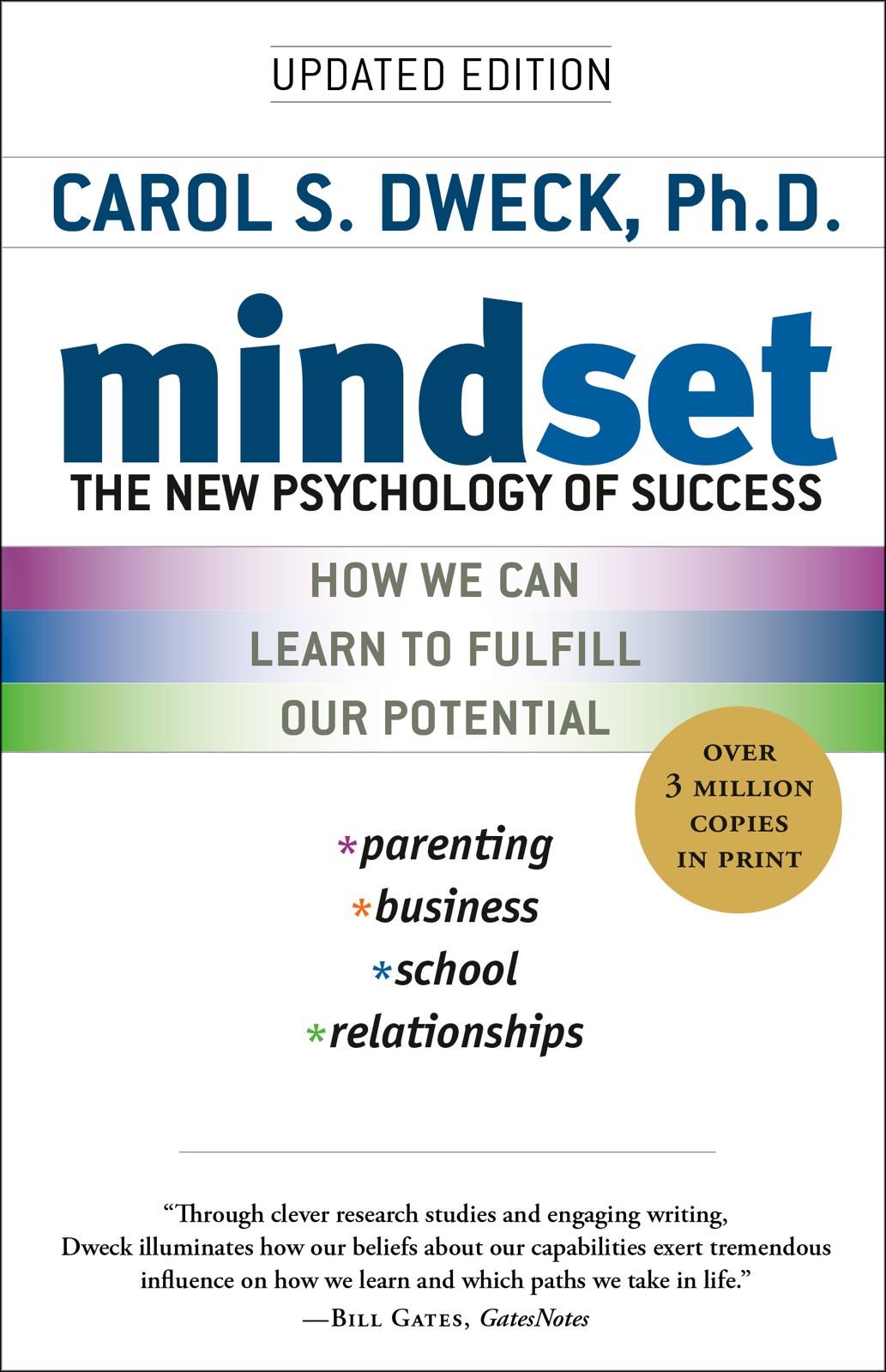
Mindset
The New Psychology of Success
Whether you believe abilities are fixed or growable quietly decides how far they grow.
Core ideas
The fixed mindset asks, am I smart? The growth mindset asks, what can I learn? The question shapes the outcome.
Praise effort and process, not talent. Telling kids they are smart teaches them to stop risking mistakes.
Setbacks are information in a growth mindset and verdicts in a fixed one.
Mindsets are beliefs, not traits. Noticing your fixed-mindset triggers is how change starts.
Lessons from the book
Two mindsets, two lives
A belief about ability quietly becomes a strategy for living.
In the fixed mindset, every task is a referendum on your talent, so risk feels like threat and effort feels like embarrassing evidence that you lack the gift. In the growth mindset, ability is a starting point, so risk is opportunity and effort is simply the mechanism. Same person, same challenge, entirely different behaviour.
Dweck's experiments made the belief visible: students taught that the brain grows chose harder problems, persisted longer, and enjoyed the work more. The belief works like a thermostat for challenge-seeking. Change the belief and the behaviour follows, which is unusual leverage for a single idea.
The praise trap
You are so smart is an instruction to stop taking risks.
In the famous studies, children praised for intelligence went on to choose easier puzzles, lie about their scores, and crumble after failure. Children praised for effort chose harder puzzles and improved. Talent praise turns performance into identity, and nobody gambles their identity willingly.
The fix is to praise process: strategy, persistence, the choice of a hard challenge. Not empty praise for effort that failed, but honest engagement with how they worked. It applies to adults too. Teams praised for being brilliant hide mistakes. Teams praised for learning surface them early, which is where improvement starts.
Catching your own fixed mindset
You do not have one mindset. You have triggers.
Later editions add a warning about the false growth mindset, because people began wearing growth as a badge. Dweck's counter is that everyone is a mixture. The useful work is noticing your triggers: criticism, a rival's success, a task just past your competence. That flash of defensiveness is the fixed mindset arriving.
Her suggestion is almost playful: give the fixed-mindset voice a name, notice when it speaks, and answer it with a growth question. What would learning look like here? It sounds small, but the gap between reacting from threat and responding with curiosity becomes, over years, the gap between plateauing and improving.
Our take
One idea, patiently applied to school, sport, business, and marriage: if you believe ability is fixed, you spend life protecting a verdict, and if you believe it grows, you spend life collecting skills. Dweck's studies on praise are the part we think about most. Tell a child they are smart and they start choosing easier puzzles.
Two honest caveats. The book repeats its point more than it needs to, and some later classroom interventions produced smaller effects than the headlines promised. We still recommend it, because the core mechanism survives the scrutiny and you will catch your own fixed mindset in the act within a chapter. Few books pay off that fast in daily self-talk.
Is it for you?
Read it if
Parents, teachers, managers, and anyone who hears the words I am just not a maths person in their own head.
Skip it if
Readers allergic to repeated case studies, or hunting for the strongest replication-proof effect sizes.