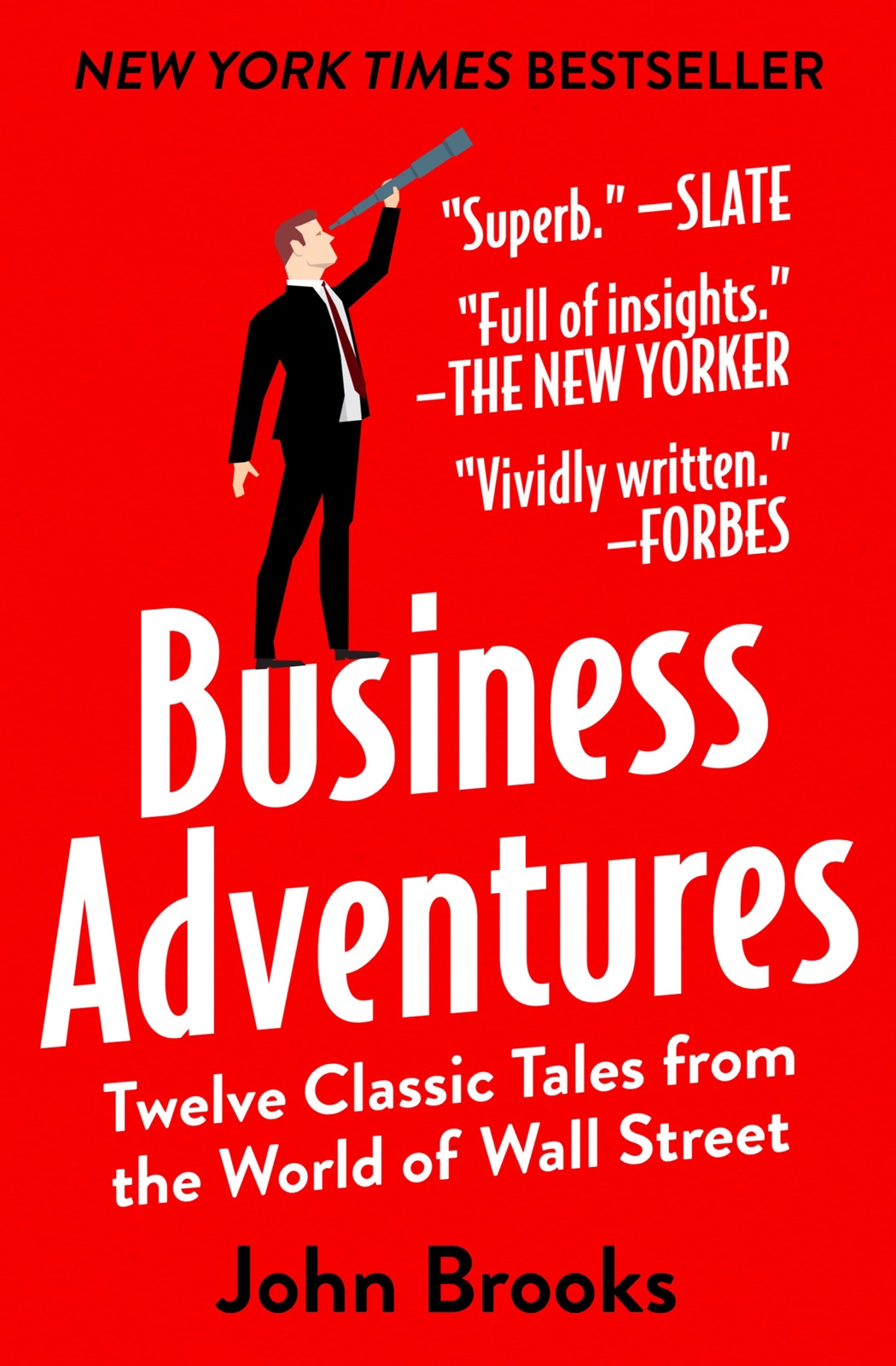
Business Adventures
Twelve Classic Tales from the World of Wall Street
Twelve deeply reported business stories that show human nature, not strategy, decides how companies rise and fall.
Core ideas
Great products can still fail when a company believes its own research over its customers.
Betting the whole company on one bold idea can save it, and success then breeds new dangers.
Markets crash on emotion and rumour far more than on facts.
The line between clever and criminal in finance is often just who got caught.
Lessons from the book
The Edsel and the danger of loving your own research
Ford studied the market for years, then launched a car almost nobody wanted.
Ford poured huge effort and money into the Edsel. It ran surveys, chased the mood of buyers, and even agonised over a name that would feel right. On paper the process looked careful and modern. Yet the finished car landed with a thud and became a byword for failure. Brooks shows how a company can gather mountains of data and still miss the simple fact that tastes had shifted while it was busy planning.
The lesson is quiet but sharp. Research tells you about the past, not the future, and it flatters whoever commissioned it. The Edsel team fell in love with their own careful work and mistook effort for insight. When a plan feels bulletproof because so much study went into it, that is exactly the moment to ask what the numbers cannot see. Confidence built on data can be as blind as a pure hunch.
Xerox, and how success quietly becomes the threat
A small firm bet everything on one machine, won big, then had to guard against its own comfort.
Before the 914 copier, Xerox was a modest company taking an enormous gamble on an unproven technology. The bet paid off spectacularly, and copying became something everyone suddenly did. Brooks follows the firm from that desperate wager to the odd problems of winning: what a rich company owes society, how to keep inventing, and how to stay hungry once the money flows in freely and the pressure that forced the first bold move has gone.
This is the part people forget. The hard chapter is not the struggle before the breakthrough, it is the ease afterwards. Success removes the very fear that made you sharp, and a company can drift while still looking healthy on paper. The Xerox story is a warning to anyone who has just won: the next danger is not a rival, it is your own comfort, and it arrives dressed as good news.
Crashes and corners: how little markets actually change
The 1962 panic, the Piggly Wiggly corner and insider trading all rhyme with today.
Brooks describes the sudden market drop of 1962, when prices fell hard for no clean reason and everyone scrambled to explain it after the fact. He tells the strange tale of the Piggly Wiggly founder trying to corner his own stock, and the Texas Gulf Sulphur affair, where insiders traded on a rich mineral find before the public knew. Read together, these chapters feel eerily current, as if written about last year rather than sixty years ago.
The point is that markets are made of people, and people barely change. Fear spreads faster than facts, greed dresses itself up as cleverness, and the line between a smart trade and an illegal one often comes down to timing and who is watching. If you want to feel calmer during the next crash or scandal, read these stories first. They will not predict the event, but they will make it feel familiar.
Our take
We think this is the most enjoyable business book you can read that never once tells you what to do. Brooks was a reporter, not a guru, and each chapter reads like a long, patient magazine feature about people under pressure. You finish the Edsel story or the Xerox story feeling you understand how a real company thinks, panics and decides, which is worth more than a hundred bullet-point lessons.
The honest caveat is that these are stories from the 1950s and 1960s, and it shows. The companies, the money and the manners all feel of their time, and a couple of chapters, notably the ones on tax law and currency policy, genuinely drag. Brooks never spells out the takeaway either, so you have to do the extracting yourself. Read it for the pattern-spotting, not for instructions, and be willing to skim the driest chapters.
Is it for you?
Read it if
Read it if you want the timeless human side of business, told through real corporate dramas rather than tidy frameworks.
Skip it if
Skip it if you want quick tactics, modern case studies, or a step-by-step playbook you can apply on Monday.