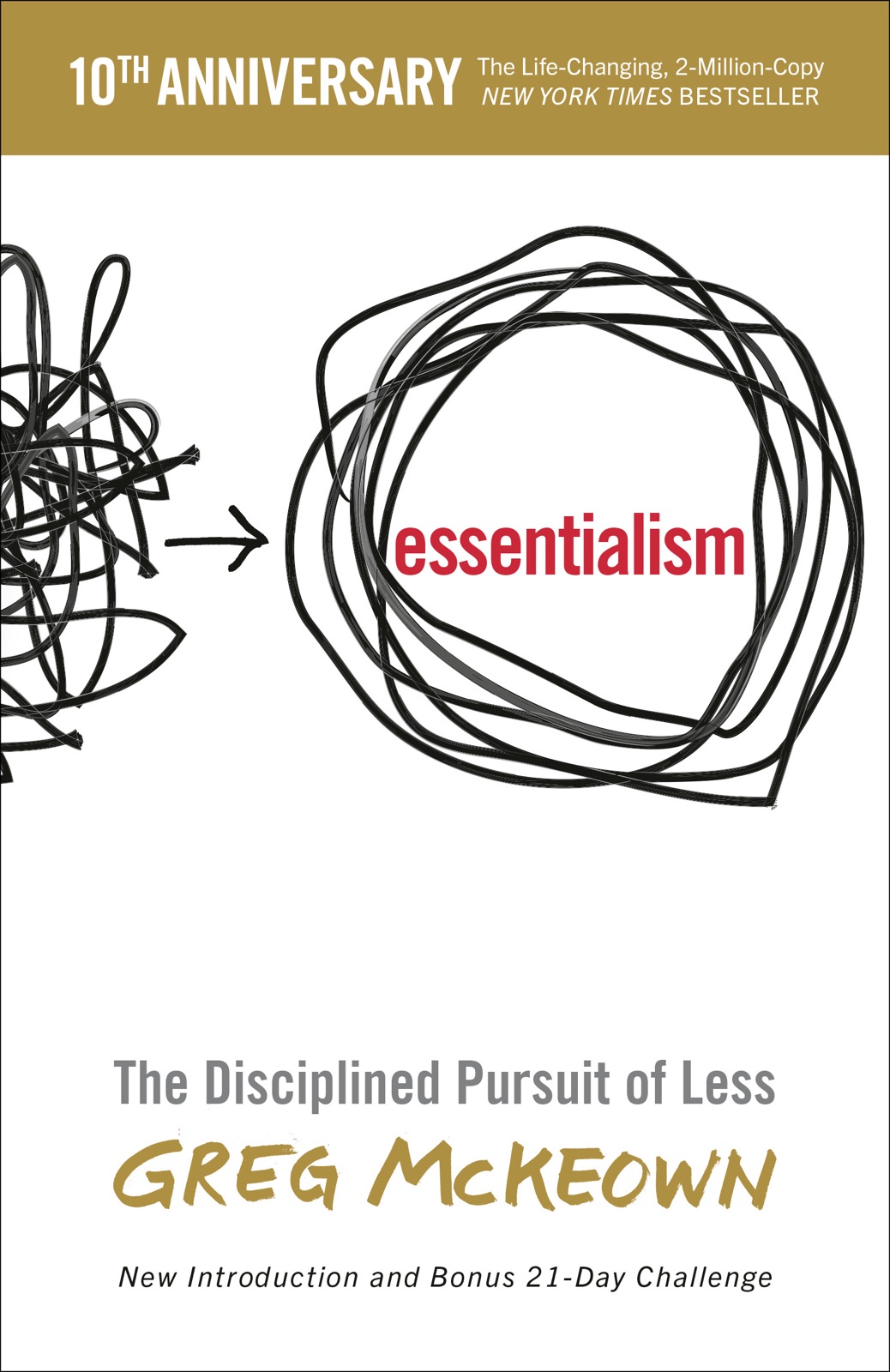
Essentialism
The Disciplined Pursuit of Less
If you do not prioritise your life, someone else will.
Core ideas
Almost everything is noise. A disciplined search for the vital few beats doing more things adequately.
If it is not a clear yes, it is a no. A ninety percent rule makes trade-offs honest.
Saying no gracefully is a skill, and it earns more respect than overcommitting ever does.
Protect the asset: sleep, buffers, and boundaries make sustained contribution possible.
Lessons from the book
Success can become a catalyst for failure
Do good work and the reward is more demands, until the good work stops.
McKeown opens with a diagnosis that stings. Capable people earn options and requests, and saying yes to enough of them destroys the focus that earned them. He calls it the paradox of success. The more useful you become, the more scattered you are forced to be, unless you deliberately intervene.
The intervention is a mindset shift from how can I fit it all in, to which problem do I actually want. Essentialists accept they cannot do it all, so they make one big choice instead of a hundred small compromises. Non-essentialists never choose, so the world chooses for them, one meeting invite at a time.
The ninety percent rule
If a choice scores below ninety out of a hundred, treat it as a zero.
When you weigh an option, give it a score. If it lands anywhere below ninety, reject it as if it scored ten. This feels brutal and wasteful, and that is exactly why it works. Saying yes to the merely good is what leaves no room for the great, in wardrobes, projects, and careers alike.
The rule fixes a specific bug: we compare options against nothing instead of against what they cost. Every yes spends time you no longer have for something better. Setting the bar absurdly high converts a fuzzy feeling of busyness into clean, visible trade-offs you can actually reason about.
Saying no without burning bridges
People respect a clear no more than a resentful, half-delivered yes.
The most practical chapter is a menu of graceful noes. Separate the decision from the relationship: you are declining the request, not rejecting the person. Offer the trade-off out loud, as in, if I take this on, this other thing slips. Or slow it down: let me check my calendar and come back to you.
McKeown noticed across years of coaching that short-term awkwardness buys long-term respect. The chronic yes-sayer ends up missing deadlines and disappointing everyone slightly. The clear no-sayer disappoints one person mildly, once, and becomes known as someone whose yes actually means something.
Our take
The word priority entered English as a singular, and McKeown wants it back. His argument is that success quietly breeds failure: do good work and you get more requests, more meetings, and more directions, until the work that made you valuable gets crowded out. The fix is not efficiency. It is the discipline of choosing almost nothing.
We like this book as the strategy layer above tools like Getting Things Done. GTD organises your commitments, Essentialism questions whether they should exist. It repeats itself, as most one-idea books do, but the one idea is genuinely load-bearing. The clear-yes-or-no rule has saved us from more bad commitments than any app.
Is it for you?
Read it if
Capable people whose reward for good work has become more work, meetings, and scattered priorities.
Skip it if
Readers who need tactical time-management systems rather than a philosophy of fewer, better commitments.