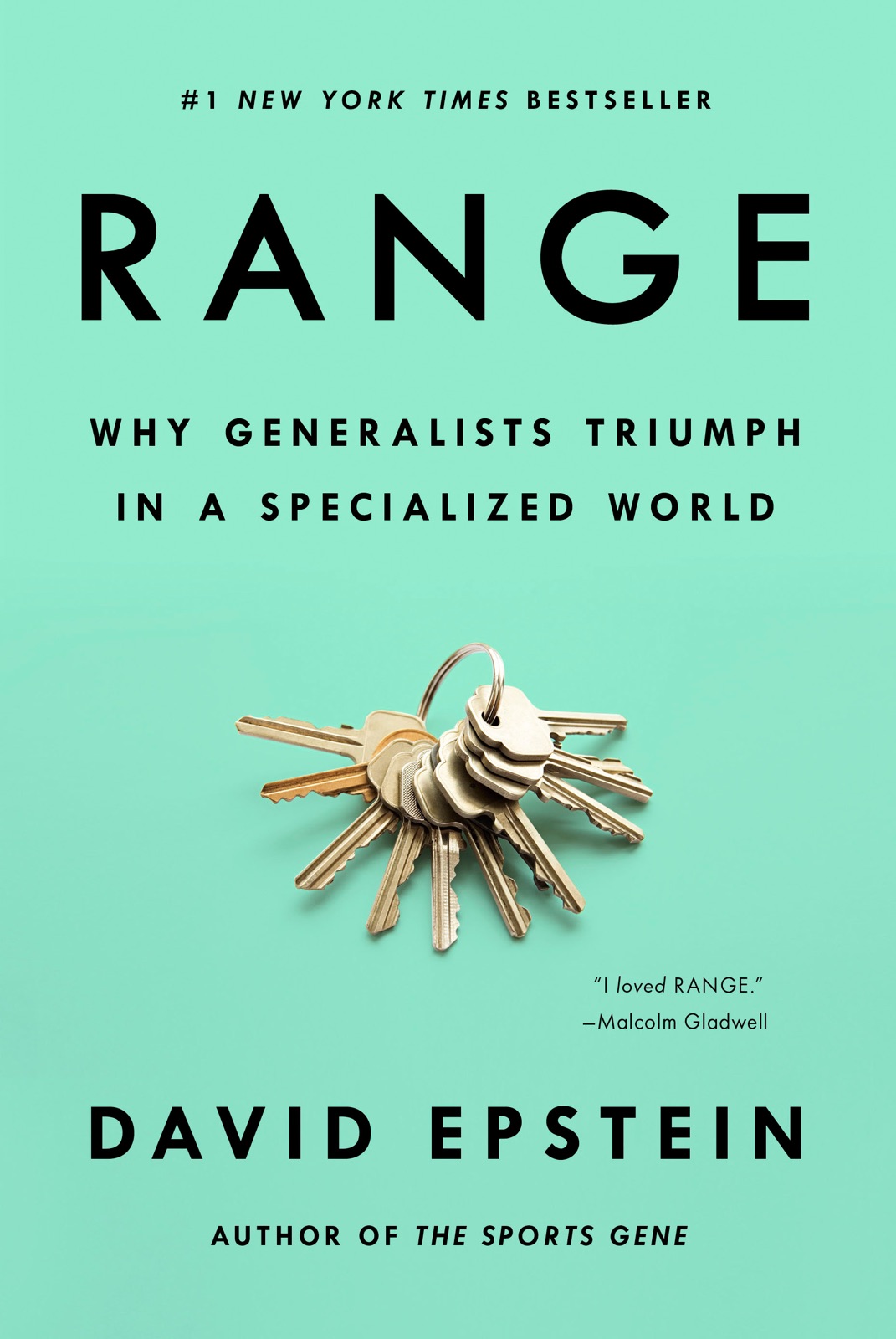
Range
Why Generalists Triumph in a Specialized World
In most of real life, generalists who sample widely beat specialists who started early.
Core ideas
Tiger Woods is the exception. Roger Federer, who sampled sports late and widely, is the rule.
Kind learning environments reward early specialisation. Wicked ones, like most of life, punish it.
Sampling periods and career switches are not wasted time. Match quality compounds harder than head starts.
Breadth is where breakthroughs come from: outsiders connect what insiders cannot see.
Lessons from the book
Kind worlds and wicked worlds
Ask what kind of game you are playing before copying the specialist.
Chess and golf are kind: the board is visible, feedback is immediate, and the same patterns recur. Practice in a kind domain compounds cleanly, which is why prodigies exist there. Most of the world is wicked: incomplete information, delayed feedback, rules that change mid-game. In wicked domains, narrow experience can actively deceive you.
Epstein warns that we take lessons from kind domains and apply them everywhere. The veteran firefighter misreads the unusual fire. The credentialed forecaster loses to the curious generalist. Before you copy any specialist playbook, ask which environment you are actually standing in.
Match quality beats head starts
Knowing where to aim is worth more than starting early.
Economists call it match quality: the fit between who you are and the work you do. People who switch, sample, and start late often win in the end because they aim better. The early specialiser races ahead on a path chosen at twelve. The sampler picks the right path at thirty and overtakes.
The practical move is to treat your commitments as experiments with exit ramps. Short-term planning is not a character flaw, and quitting a bad fit fast is not weakness. Van Gogh worked through five failed careers before painting, and the wandering was the mechanism, not the obstacle.
Outsiders make the breakthroughs
Solutions to hard problems keep arriving from just outside the field.
Epstein documents how stuck scientific problems are routinely cracked by adjacent outsiders: a chemist solving a biology puzzle, an amateur with an odd toolkit. Deep insiders share the same training, so they share the same blind spots. Breadth supplies the analogies that tunnel through the wall.
You can use this on purpose. When stuck, hunt for a field that solved a structurally similar problem. Keep a foot in domains that look irrelevant to your job. Time spent ranging feels inefficient in the moment, and it pays off precisely because nobody else in the room has done it.
Our take
This is the antidote to a decade of ten-thousand-hours anxiety. Epstein splits the world into kind learning environments, where patterns repeat and feedback is instant, and wicked ones, where rules shift and experience can mislead. Golf is kind. Careers, markets, and modern work are mostly wicked, and there breadth wins.
We recommend it most to people who feel behind because their path has been indirect. The evidence says the winding road is often the advantage: match quality, meaning how well your work fits you, predicts success better than a head start does. Read it beside Deep Work and you get both halves. Range widely first, then go deep where it counts.
Is it for you?
Read it if
Late starters, career changers, and parents anxious that everyone else specialised at six.
Skip it if
Readers in truly kind domains like classical music or chess, where early drilling really does rule.