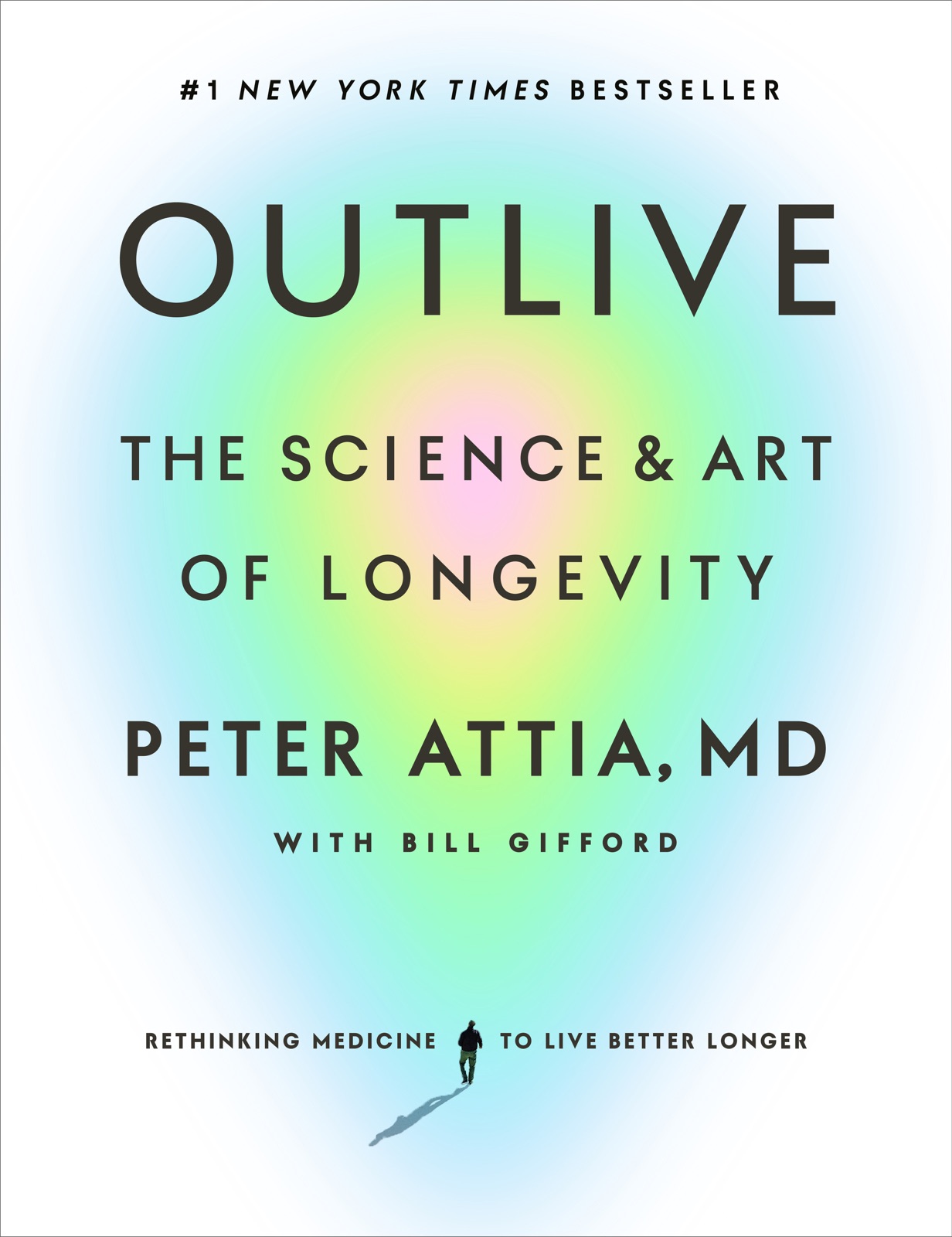
Outlive
The Science and Art of Longevity
Modern medicine is built to rescue you late. Attia's case is for engineering your last decade early.
Core ideas
Lifespan is how long you live. Healthspan is how well. Standard medicine rescues; the better game is prevention.
The four horsemen, heart disease, cancer, neurodegeneration, and metabolic disease, incubate for decades. Play defence early.
Exercise is the most powerful longevity drug known. Strength and aerobic capacity are the doses that matter.
Train for the Centenarian Decathlon: the specific physical tasks you still want to do at ninety.
Lessons from the book
Play defence decades early
The diseases that kill most of us take thirty years to build. Start negotiating now.
Heart disease, cancer, dementia, and metabolic disease cause the great majority of deaths in the developed world, and all four incubate quietly for decades before diagnosis. Attia's complaint about mainstream medicine is timing: it waits for the event, then rescues heroically, when the good options have already thinned out.
His alternative is to act during the incubation. Know your risk markers early, screen sooner than the guidelines suggest, and treat exercise, sleep, and nutrition as prescriptions rather than lifestyle extras. In this model you become the primary actor in your own health, and the book's job is to make you a competent one.
Exercise is the strongest drug we have
Fitness predicts survival better than almost any number your doctor tracks.
Attia marshals the data bluntly: going from unfit to fit cuts mortality risk more than quitting smoking. Aerobic capacity and simple strength markers like grip predict survival remarkably well. Muscle in later life is the difference between a fall and a fracture, between independence and decline.
His practical split is unglamorous. A base of easy, conversational-pace cardio for metabolic health, several hours a week. Occasional hard intervals for peak capacity. Strength work built around carrying, hinging, and grip. None of it is exotic, all of it compounds, and every year you start earlier makes each year of function cheaper.
Train for your last decade
Decide what you want to do at ninety, then work backwards to today's workout.
The Centenarian Decathlon is a list, not a metaphor. Write down the physical acts you refuse to surrender: walking a trail, lifting a suitcase into an overhead bin, playing on the floor with grandchildren. Capacity declines on a known slope, so each item implies what you must be able to do now, with margin to spare.
Wanting to carry twenty pounds of groceries at ninety means deadlifting comfortably today. That backwards arithmetic transforms exercise from punishment for what you ate into rehearsal for the life you intend to keep. We find it the most motivating single idea in the longevity literature.
Our take
Attia's reframe is the reason this book earns its length: stop asking how to live longer and start asking what you want to be able to do at eighty five. Carry groceries upstairs, lift a grandchild, get up off the floor unaided. Then train, today, specifically for that list. He calls it the Centenarian Decathlon, and it converts vague health anxiety into a training plan.
It is detailed to a fault, and the middle chapters on lipids and metabolic markers ask for real attention. We also appreciate what it refuses to sell: no supplement stack, no hacks, mostly the unglamorous heavy lifting of exercise, sleep, and early screening. Pair it with Why We Sleep and Atomic Habits and you have the why, the what, and the how of a health foundation.
Is it for you?
Read it if
Readers in their 30s to 60s willing to act now on exercise, sleep, and screening for a better last decade.
Skip it if
Anyone wanting a quick list of hacks. It is long, detailed, and sceptical of supplements and fads.