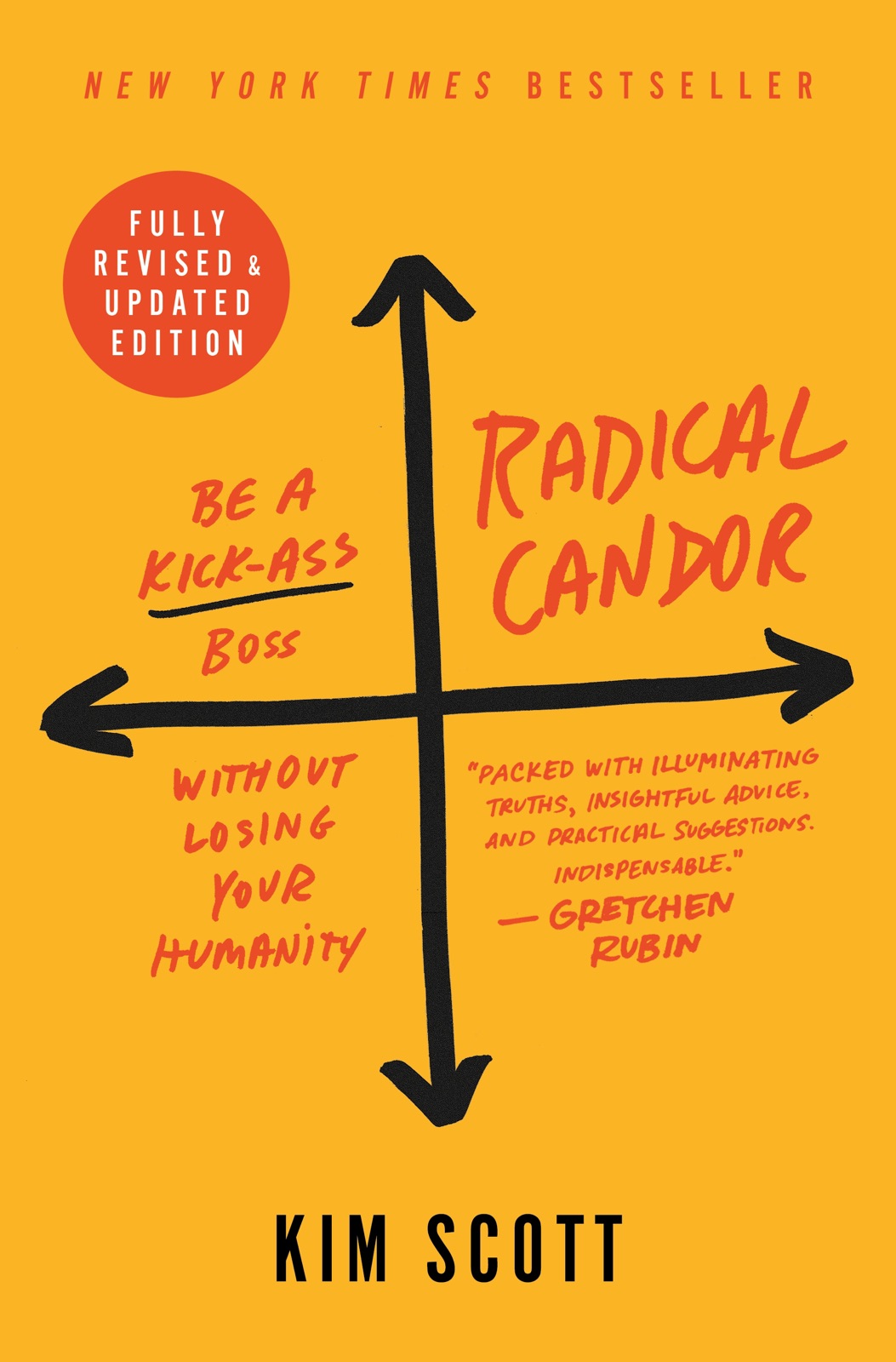
Radical Candor
Be a Kick-Ass Boss Without Losing Your Humanity
Good management is caring personally and challenging directly at the same time, not choosing one.
Core ideas
Two axes define feedback: care personally and challenge directly. Most management failure is a shortage of one or both.
Ruinous empathy, staying silent to be nice, hurts people more than honest criticism ever will.
Ask for criticism before you give it, and visibly reward the candour you receive or it stops coming.
Praise in public, criticise in private, and make both specific, sincere, and immediate.
Lessons from the book
The two-by-two that explains bad bosses
Care personally. Challenge directly. Every management style is some mix of the two.
Put care personally on one axis and challenge directly on the other. The top right, doing both, is radical candor: feedback that lands because the person knows you are on their side. The other three quadrants are the familiar failures: obnoxious aggression, manipulative insincerity, and ruinous empathy.
Scott's framing removes the false choice between being kind and being honest. Challenging someone's work while showing you care about them as a person is not a contradiction. It is the definition of doing the job. The quadrants also give teams a shared vocabulary, which makes hard conversations easier to start.
Ruinous empathy is the common failure
Withholding criticism to be kind is a decision about your comfort, not their good.
Scott's most-told story is about an employee she liked and never corrected. His work was weak, everyone knew, and she said nothing to spare his feelings. Ten months later she had to fire him, and his entirely fair question was, why did nobody tell me? Silence had cost him the chance to improve.
That is ruinous empathy, and she estimates most feedback failures live there, not in cruelty. The kindness is fake because it protects the manager from an awkward conversation while the employee walks into a wall. Framed that way, direct challenge stops feeling mean. It becomes the only honest form of care.
Get feedback flowing toward you first
You cannot dish it out until you have proved you can take it.
Before criticising anyone, ask for criticism of yourself, and mean it. Scott's go-to question: what could I do or stop doing that would make it easier to work with me? Then count to six in the silence. Somebody will fill it, and what they say first is usually the thing everyone has been avoiding.
How you respond decides everything that follows. Reward the candour visibly: thank them, fix something, refer back to it later. Punish it with defensiveness, even once, and the channel closes. Teams calibrate to what leaders do, not what they claim to welcome.
Our take
Scott's two-by-two earns its fame because it names the failure most decent people actually fall into. It is not the jerks who do the most damage. It is ruinous empathy: liking someone too much to tell them the truth, then watching the missed feedback compound into a firing that blindsides them. Caring and challenging are not opposites. Done right, the challenge is the caring.
The book runs longer than the idea strictly needs, and the Silicon Valley war stories will not map onto every workplace. But the operating advice is concrete and usable the same week: solicit criticism before dishing it out, praise specifically and publicly, criticise privately and immediately. If you manage even one person, this plus Crucial Conversations covers most of the hard parts.
Is it for you?
Read it if
New managers, and experienced ones who suspect their kindness has quietly become avoidance.
Skip it if
Readers outside people-management, or anyone who wants organisational theory rather than practice.