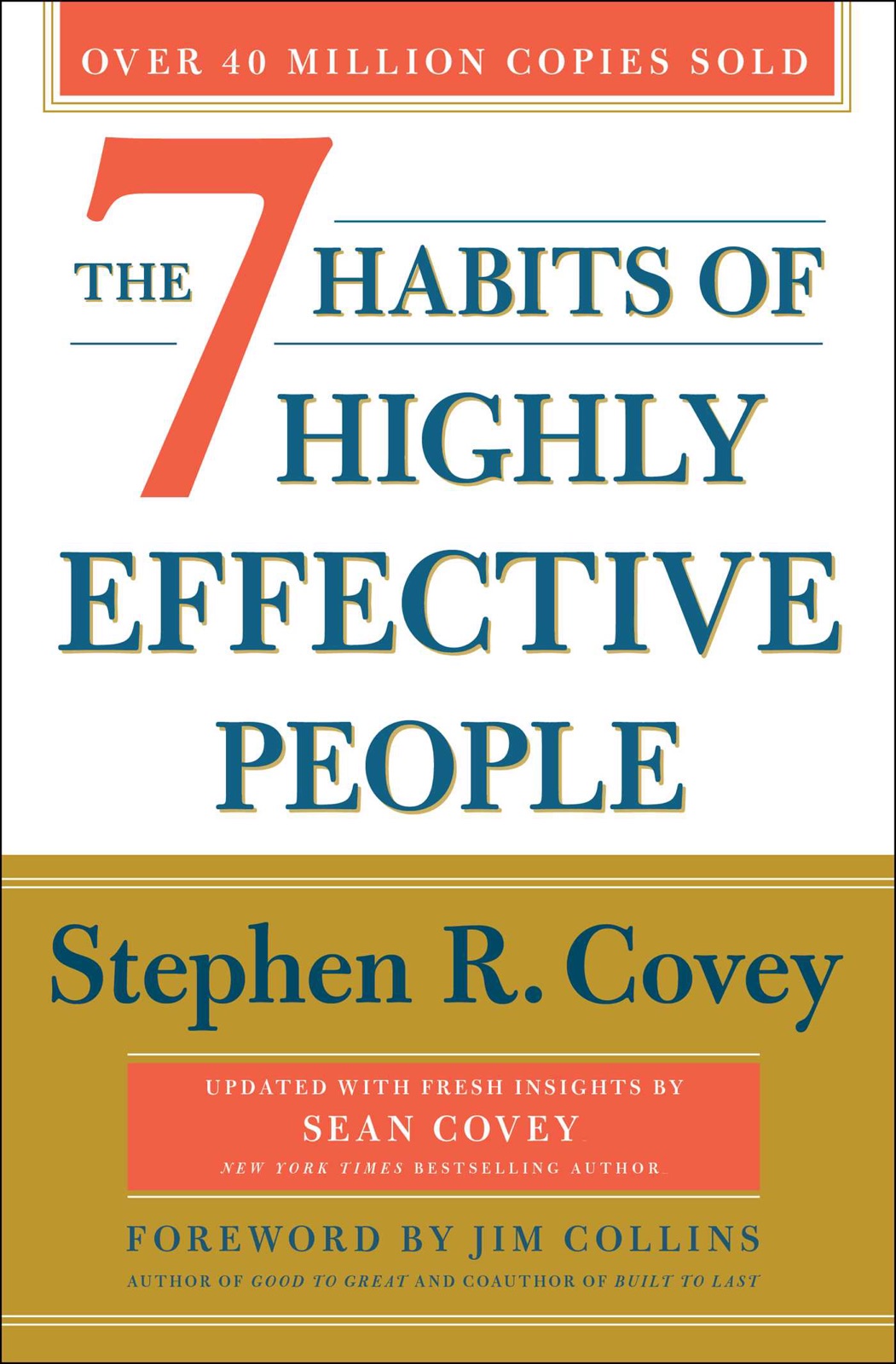
The 7 Habits of Highly Effective People
Powerful Lessons in Personal Change
Character before technique: the original operating system for effectiveness that later books keep rediscovering.
Core ideas
Private victory precedes public victory: be proactive, begin with the end in mind, put first things first.
Work inside your circle of influence and it grows. Stew in your circle of concern and it shrinks.
Think win-win or no deal, and seek first to understand before trying to be understood.
Sharpen the saw: schedule renewal of body, mind, heart, and craft before the world schedules it for you.
Lessons from the book
The private victory
Self-mastery comes before influence. There is no shortcut through personality.
Covey opens by distinguishing the character ethic from the personality ethic. Techniques for charm and influence, he argues, are cut flowers without roots. The first three habits are internal: take responsibility for your responses, decide what you are living toward, and organise your week around it. That is the private victory.
The order matters. Trying to win with people before winning with yourself produces manipulation or burnout. The proactivity habit, choosing your response in the gap between stimulus and reaction, deliberately echoes Viktor Frankl. Covey read him closely, and the whole system stands on that single human freedom.
Live from your circle of influence
Energy spent on what you can affect expands what you can affect.
Draw two circles. The outer one holds everything you care about: the economy, other people's choices, the past. The inner one holds what you can actually affect: your work, your responses, your commitments. Proactive people pour attention into the inner circle, and Covey's observation is that it grows when they do.
Reactive attention does the opposite. Hours spent in the concern circle produce blame, anxiety, and no motion, and the influence circle contracts. The test is your language. There is nothing I can do, versus, let me look at my options. Track which circle your sentences come from for one day. The audit is uncomfortable and useful.
Quadrant two, where effectiveness lives
The important-but-not-urgent work is the work that changes your life.
Sort your tasks by urgent and important. Crises are quadrant one and handle themselves by force. The trap is quadrant three, urgent but unimportant noise that impersonates work. The prize is quadrant two: prevention, relationships, planning, exercise, learning. Nothing there is due today, which is exactly why it gets postponed for years.
Covey's fix is to schedule quadrant two first, as immovable appointments, and let the urgent fill the gaps. Plan weekly rather than daily: choose a handful of big rocks for each role in your life before the gravel arrives. Every modern deep-work and essentialism argument descends from this move. It still works.
Our take
Plenty of the advice you have read elsewhere was minted here in 1989. Covey's insight was to aim below technique at character: what he calls the private victory of proactivity, clear ends, and honest priorities, which has to happen before any public victory with other people. The urgent-important quadrant and seek-first-to-understand both live in this book.
It has aged in style but not in substance. The examples are boardrooms and family dinners from another era, and the tone occasionally turns sermon-like. Read past that. The Habit 2 exercise, drafting what you hope four speakers say at your funeral, remains one of the most clarifying priority tools we know. A foundation text that earns the label.
Is it for you?
Read it if
Readers wanting one durable framework for character and priorities rather than scattered productivity tips.
Skip it if
Those put off by 1980s corporate examples and an earnest, sometimes preachy delivery.