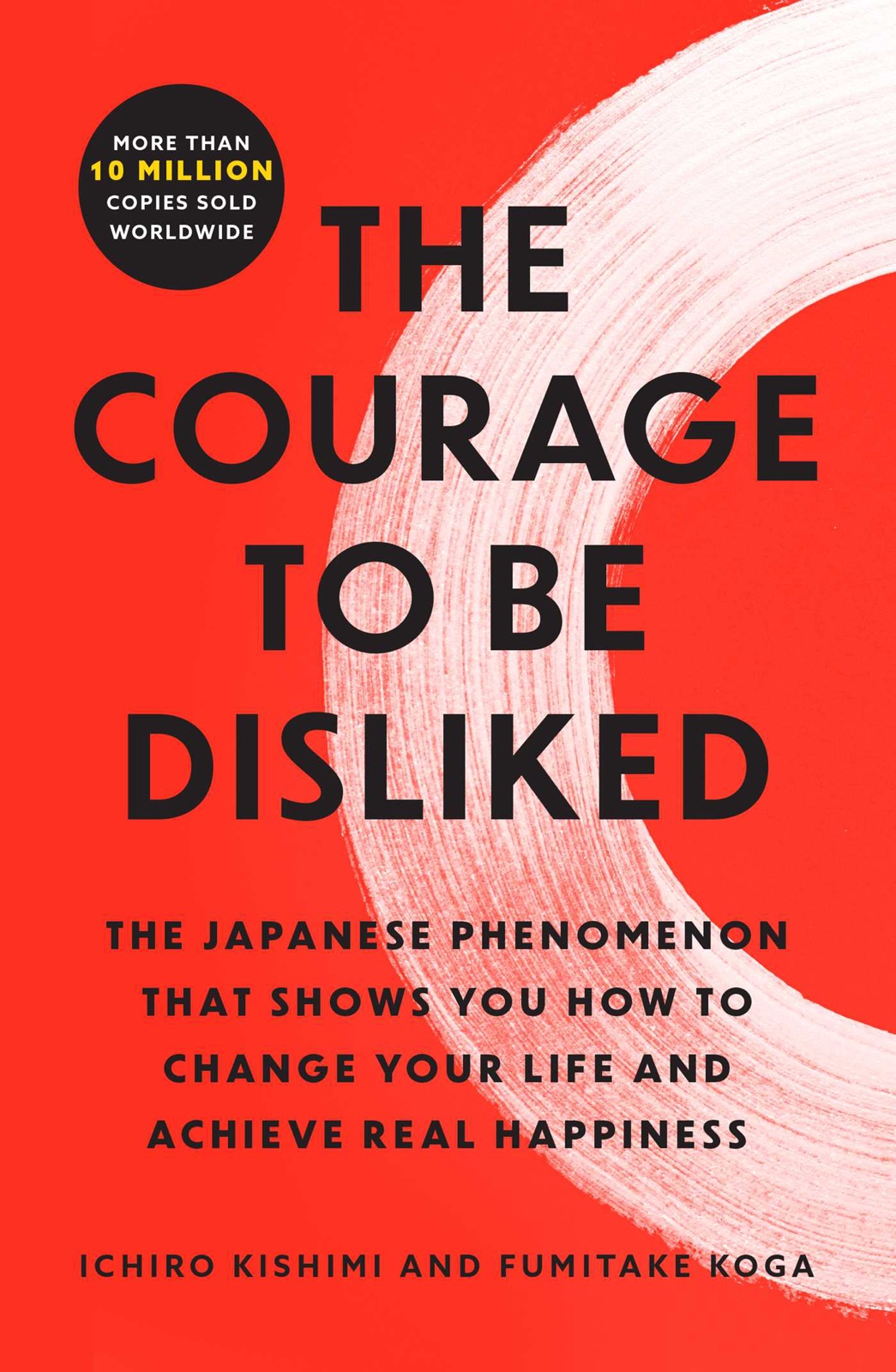
The Courage to Be Disliked
The Japanese Phenomenon That Shows You How to Change Your Life and Achieve Real Happiness
Your unhappiness is not caused by your past, and needing everyone's approval is a cage you can leave.
Core ideas
Adler against Freud: we act toward present goals, not from past causes. The past informs, it does not dictate.
All problems are interpersonal problems, and comparison with others is their engine.
The separation of tasks: whether someone likes you is their task, not yours.
Happiness is contribution: feeling useful to a community, not being praised by it.
Lessons from the book
You act toward goals, not from causes
Adler's provocation: the past explains less about you than your present purpose does.
Freud's model looks backward: today's behaviour is caused by yesterday's wounds. Adler's model looks forward: we select behaviours, even miserable ones, because they serve a present goal. The man who never leaves his room is not only shaped by anxiety; staying inside also protects him from the risk of failing out in the world.
The philosopher pushes this hard, and it can sound harsh. The useful reading is not that suffering is chosen or deserved, but that explanation is not destiny. Whatever built your patterns, the question that changes anything is what the pattern is doing for you now, and whether you still want what it buys.
The separation of tasks
Whose problem is this? Answer honestly and half your burdens belong to other people.
Adler's cleanest tool is a sorting question: whose task is this? Your work, your honesty, your choices are your tasks. How other people receive them, whether they approve of you, even whether they are disappointed, are their tasks. Misery comes from doing other people's tasks, and from letting them do yours.
This is where the title comes from. If you live so that nobody ever dislikes you, you are performing a life rather than leading one, and the performance never ends. The courage to be disliked is not rudeness. It is accepting that other people's opinions of you are weather: worth noticing, impossible to govern.
Happiness is contribution
The feeling of being useful beats the feeling of being praised.
The dialogue lands on a simple definition: happiness is the sense of contributing to a community, of being useful somewhere beyond yourself. Crucially, contribution is not the same as recognition. Praise is a form of judgment from above, and chasing it hands your worth back to other people's tasks.
The practical shift is from competing to belonging. See others as comrades rather than rivals and the constant scorekeeping quiets down. Contribute where you are, whether or not anyone applauds, and self-worth stops depending on an audience. It reads like Stoicism with warmer edges, which is roughly what it is.
Our take
A philosopher and an angry young man argue across five nights, and the philosopher's positions are Alfred Adler's psychology in modern dress. The book's most useful tool is the separation of tasks: what others think of you is their task, and living to manage it is how you end up living someone else's life. Millions of readers in Japan and Korea made it a phenomenon before the English edition caught up.
We hold one honest reservation: the dialogue dismisses trauma more sweepingly than the evidence allows, and readers carrying real wounds should take that chapter as provocation rather than doctrine. The Body Keeps the Score holds the other half of that truth. Taken as a philosophy of approval, comparison, and contribution, though, it is genuinely freeing, and the dialogue format makes hard ideas feel like conversation.
Is it for you?
Read it if
Approval-seekers, overthinkers, and anyone who liked Stoicism but wants it in modern, personal terms.
Skip it if
Readers who find Socratic dialogues contrived, or who would take the anti-trauma stance at face value.