Being more productive does not mean squeezing more tasks into the same day. It means finishing more of the work that actually matters. Most people can do that in fewer hours, not more.
The trap is that busyness feels like progress. Answering forty emails gives you the same small hit of completion as writing the report that determines your year. Only one of them moves your life forward.
So start with an honest definition. Productive means the important work got done. Everything else in this guide follows from that one sentence.
This guide gives you five moves for making it true. None of them needs an app, and none of them needs an earlier alarm.
Stop measuring effort, start measuring output
Most of us judge a workday by how tired we feel at the end of it. That is effort, not output. The two are only loosely related.
Here is a better test. At five o'clock, can you name one finished thing that mattered?
If the answer is usually no, the problem is not your work ethic. The problem is that nothing in your day was designed to make the important work happen first. The inbox was designed for the opposite.
To-do lists feed the illusion. Ticking six tiny boxes feels like a good day even when the one big thing rolled over again. Count finished important work, not ticks.
If you manage people, this cuts both ways. Judge the team on what ships, not on who looks busiest in the chat channel, or you will train everyone to perform effort instead of finishing work.
Longer hours make all of this worse, not better. A tired brain reaches for easy tasks, so the extra hours fill up with the shallowest work of all.
Choose one highlight for the day
Here is the simplest fix, and it has the best ratio of effort to payoff. Each morning, or the night before, pick one highlight for the day.
Not a list of twenty tasks. One piece of work, roughly sixty to ninety minutes long, that you would be genuinely pleased to finish.
The point is not that you only do one thing all day. Email still gets answered and meetings still happen. The point is that the day is built around the highlight, instead of the highlight fighting for leftovers.
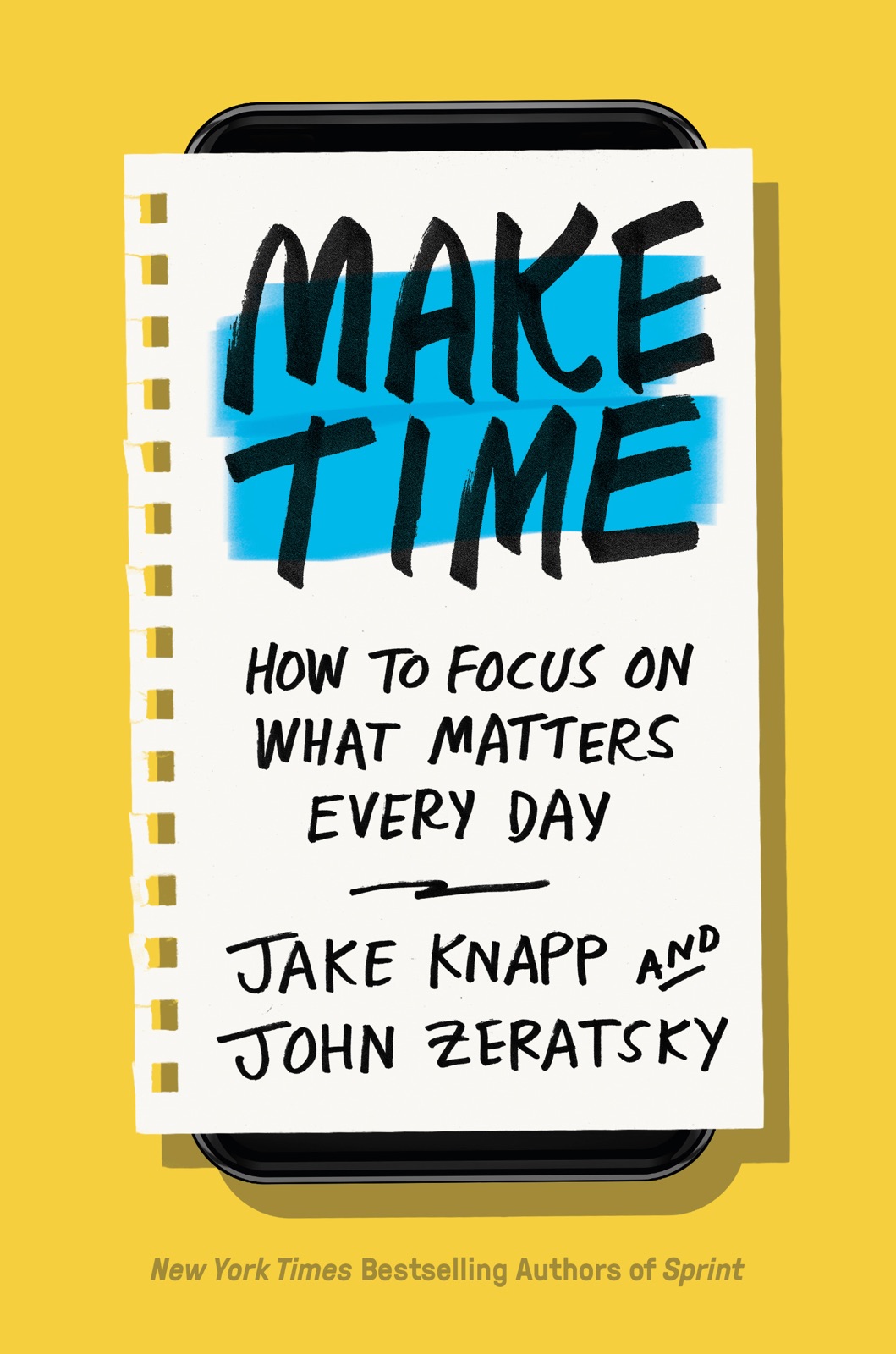
How do you pick it? Jake Knapp and John Zeratsky suggest three lenses: urgency, satisfaction, and joy. Any of the three is a fine answer, as long as you choose deliberately rather than letting the inbox choose for you.
A highlight can be personal, not just professional. Cooking for friends or a long run counts; the practice is about deciding what today is for, not about squeezing more out of yourself.
Write the highlight down where you can see it. Give it a real slot in your calendar, ideally in your best hours, and treat that slot like a meeting with someone you respect.
Knapp and Zeratsky ran design sprints at Google before writing about time. Their book is the friendliest entry point to working this way.
Their other big idea matters just as much. Distraction is not a personal failing, it is a product, built by clever teams to be bottomless.
You do not beat that with willpower. You beat it with friction: log out of the apps, delete them from your phone, leave the phone in another room while you work.
Protect long blocks of focus
Important work is usually demanding work. Writing, coding, analysis, strategy and design all need long, uninterrupted stretches to do well.
Every interruption costs far more than the seconds it takes. After a quick glance at your inbox, part of your attention stays stuck on what you saw there, and it takes a while to return fully to the task.
A day of constant small checks is therefore a day of never being fully present in your own work. It feels busy and produces very little.
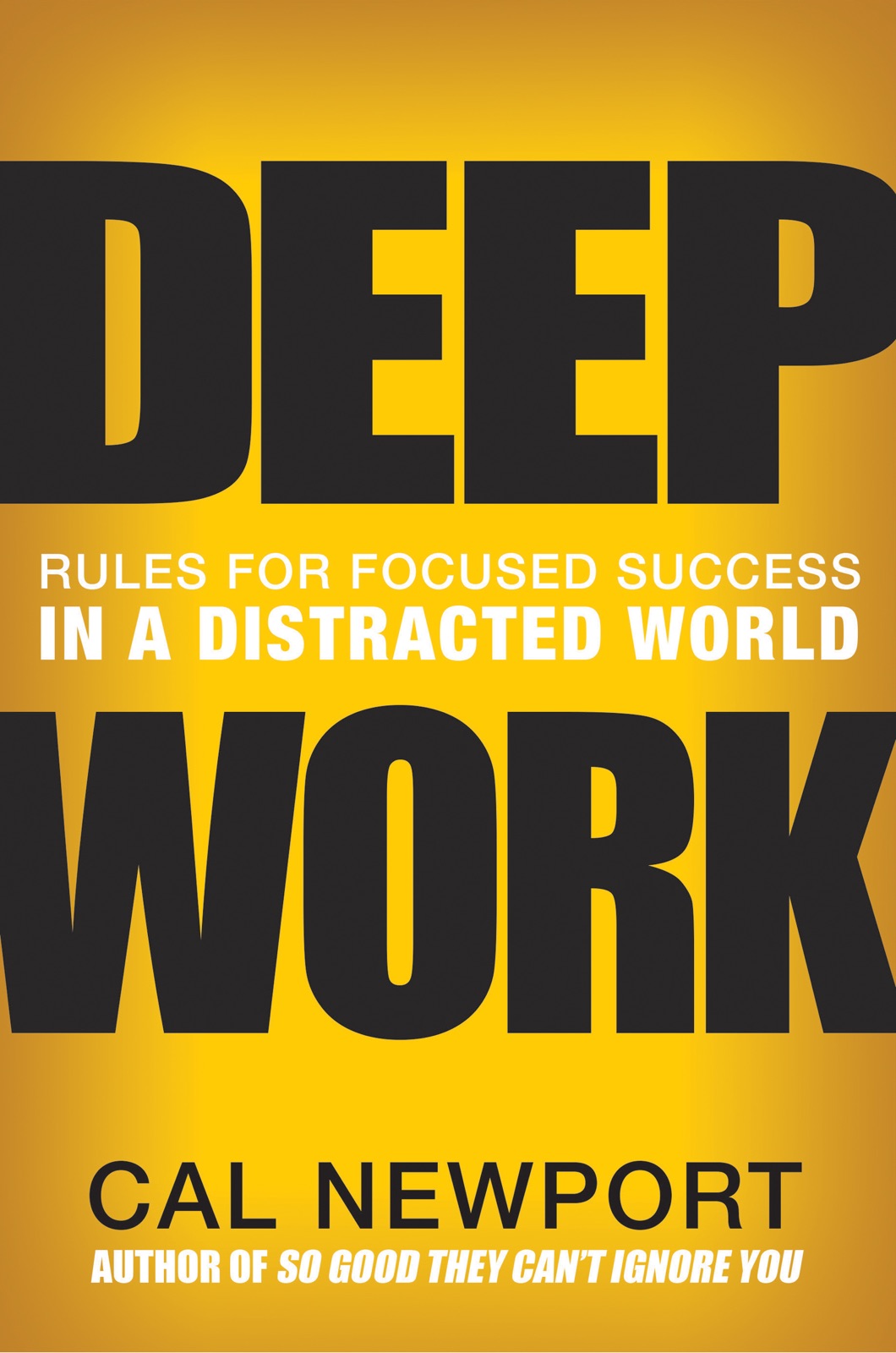
Cal Newport calls the alternative deep work: long, distraction-free sessions on things that are hard and valuable. His argument is blunt. The ability to focus is becoming rarer exactly as it becomes more valuable, so the people who keep it have an outsized advantage.
You do not need a cabin in the woods. Start with one protected block of ninety minutes a day.
Put it in the calendar like a meeting. Close everything except the task. Put the phone out of sight, not just face down.
Depth is also a skill, not a setting. The first sessions will feel itchy and slow, because your attention has been trained to expect a new stimulus every minute. That fades with practice.
One honest caveat: not every job allows this. If you run a team or work in support, aim for smaller blocks, or one deep morning a week, rather than pretending your calendar is something it is not.
Cut the shallow work, do not just compress it
Shallow work is everything that keeps the machine running without creating much value. Most email, most meetings, most status updates.
It is necessary, but it expands to fill whatever time you give it. So give it less.
Batch email into two or three fixed windows a day instead of grazing on it continuously. Very few messages are as urgent as they feel, and the senders will not notice the difference.
Templates are quiet gold here. If you write the same three emails every week, save the skeletons and stop composing them from scratch.
Be harder on meetings. Decline the ones without an agenda, and when a meeting is really a decision, propose making it in a shared document instead.
If you control your chat tools, go further. Set messages to arrive a few times a day rather than instantly, and let a clear away status make the promise your anxious green dot cannot.
Saying no is the uncomfortable core of all this. Every yes to something small is a quiet no to something big.
You do not have to be rude about it. You do have to accept that your best hours are scarce, and most requests do not deserve them.
Plan the week, not just the day
A daily highlight keeps you honest about today. A short weekly review keeps the highlights pointed somewhere.
Once a week, take twenty minutes. Look at what you finished, what you avoided, and what actually mattered.
Then choose the two or three outcomes that would make next week a success, and give each one a highlight slot before the calendar fills up. This is boring advice. It also quietly outperforms every productivity app we have tried.
Friday afternoon is the natural slot, while the week is still fresh and the next one has not started shouting. Monday morning works too, before the inbox opens.
One warning from experience: do not turn the review into a planning hobby. Twenty minutes, a few decisions, done. The system should serve the work, not replace it.
Work with your energy, not against the clock
Hours are not interchangeable. Most people get two to four genuinely good thinking hours a day, often in the morning.
No schedule trick makes hour ten as good as hour two. So match the work to the hour instead.
Put the highlight and the deep block in your best window. Push email, admin and routine calls into the low-energy slots where they belong.
Meetings deserve their own audit here. A recurring meeting that made sense a year ago can quietly outlive its purpose; once a quarter, ask which ones would actually be missed if they vanished.
If you do not know your best window, run a one-week experiment. Note your energy at the top of each hour and look for the pattern. For most people it is embarrassingly obvious by Thursday.
Treat rest as part of the system, not a reward for exhausting yourself. Real breaks away from screens, some movement every day, and a consistent seven to nine hours of sleep are what keep your good hours good.
Skipping rest to work longer is borrowing productivity from tomorrow at a punishing rate of interest. It always gets collected.
What to do first
Do not rebuild your whole working life this week. Pick two moves and run them for a fortnight.
First, choose a daily highlight each morning and give it your best ninety minutes before the inbox gets them. Second, batch your email into fixed windows and turn off every notification that is not a human who needs you right now.
Then, if you want the full argument and the full toolkit, the two books above are the pair we would hand you. Make Time is the gentle, practical one to start with. Deep Work is the more demanding one that treats focus as a career-defining skill.
Neither will make you superhuman. They will help you finish what matters and go home on time, which is what being productive actually means.