How do you start investing? Open a low-cost investment account, buy a broad index fund on a schedule, and leave it alone for decades. That is the whole core of it.
Everything else, the stock tips, the charts, the crypto discourse, is noise around that simple engine. The hard part is not knowledge. It is behaviour: starting before you feel ready, and not touching it when markets get scary.
If you feel behind, you are in good company. Most people start later than they wish they had. The consequence is not doom, it is simply that starting now matters more.
This guide walks the whole path: what to do before you invest, what to buy, how to set it up so it runs itself, and the mistakes that undo people. None of it needs maths beyond percentages, and none of it needs the news.
Before you invest anything
Two things come before your first fund purchase.
First, expensive debt. If you carry credit card balances, paying them off is the best guaranteed return you will ever get. No investment reliably beats that interest rate.
Second, a cash buffer. Three to six months of essential spending in an ordinary savings account keeps a surprise car repair or a lost job from forcing you to sell investments at the worst moment.
Check your workplace pension too. If your employer matches contributions, capture the full match before anything else. It is the closest thing to free money the system offers.
One more unglamorous step: know your numbers. If you cannot say roughly what you spend a month, track it for thirty days first. The gap between income and spending is the raw material for everything that follows.
Skip these steps and the market will eventually teach them to you, expensively. A downturn plus an emergency plus no buffer is how people sell at the bottom and swear off investing forever.
Why index funds are the sensible default
An index fund buys a small slice of every company in a market, in one purchase, at very low cost. Instead of betting on winners, you own the whole game.
Why is that the default? Because beating the market is astonishingly hard. Most professional fund managers fail to do it over long periods once their fees are counted, and the few who succeed are nearly impossible to identify in advance.
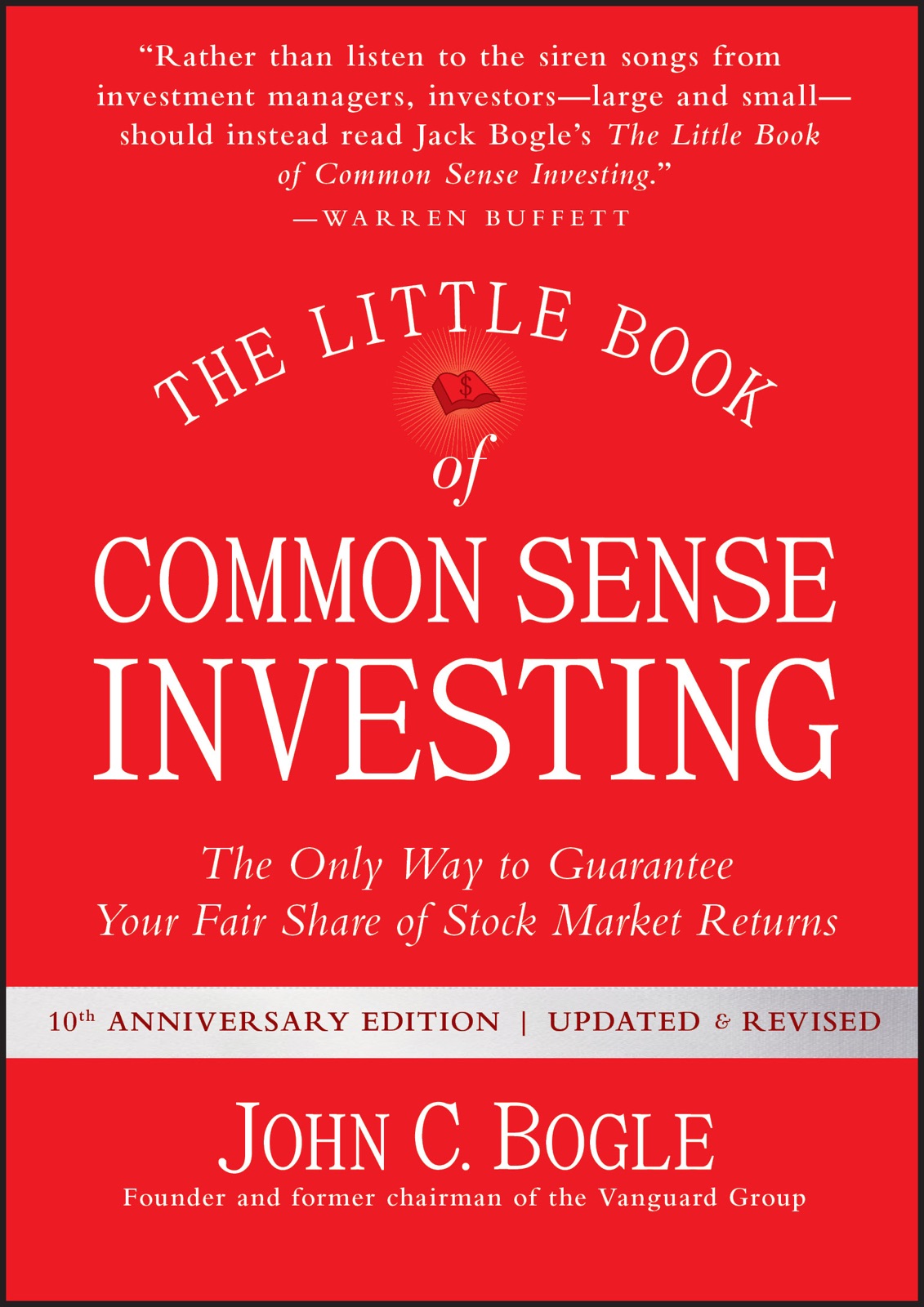
John Bogle, who founded Vanguard and brought the index fund to ordinary investors, put the case in one line: do not look for the needle in the haystack, just buy the haystack.
Costs are the other half of his argument. A fee of one or two percent a year sounds trivial, and it quietly consumes a startling share of your lifetime returns, because it compounds against you just as your gains compound for you.
What does low cost mean in practice? Look at the fund's ongoing charge. Broad index trackers commonly charge a small fraction of a percent, and anything close to one percent deserves suspicion.
Diversification is the quieter benefit. Any single company can go to zero. A fund holding thousands of them cannot, short of the end of the economy itself.
Bogle's book is short, plain and repetitive on purpose. He hammers the same few truths because the industry spends billions persuading you they cannot be true.
Keep it simple enough to ignore
Complexity is where good investing plans go to die. Ten funds are not safer than one broad one; they are just harder to manage and easier to fiddle with.
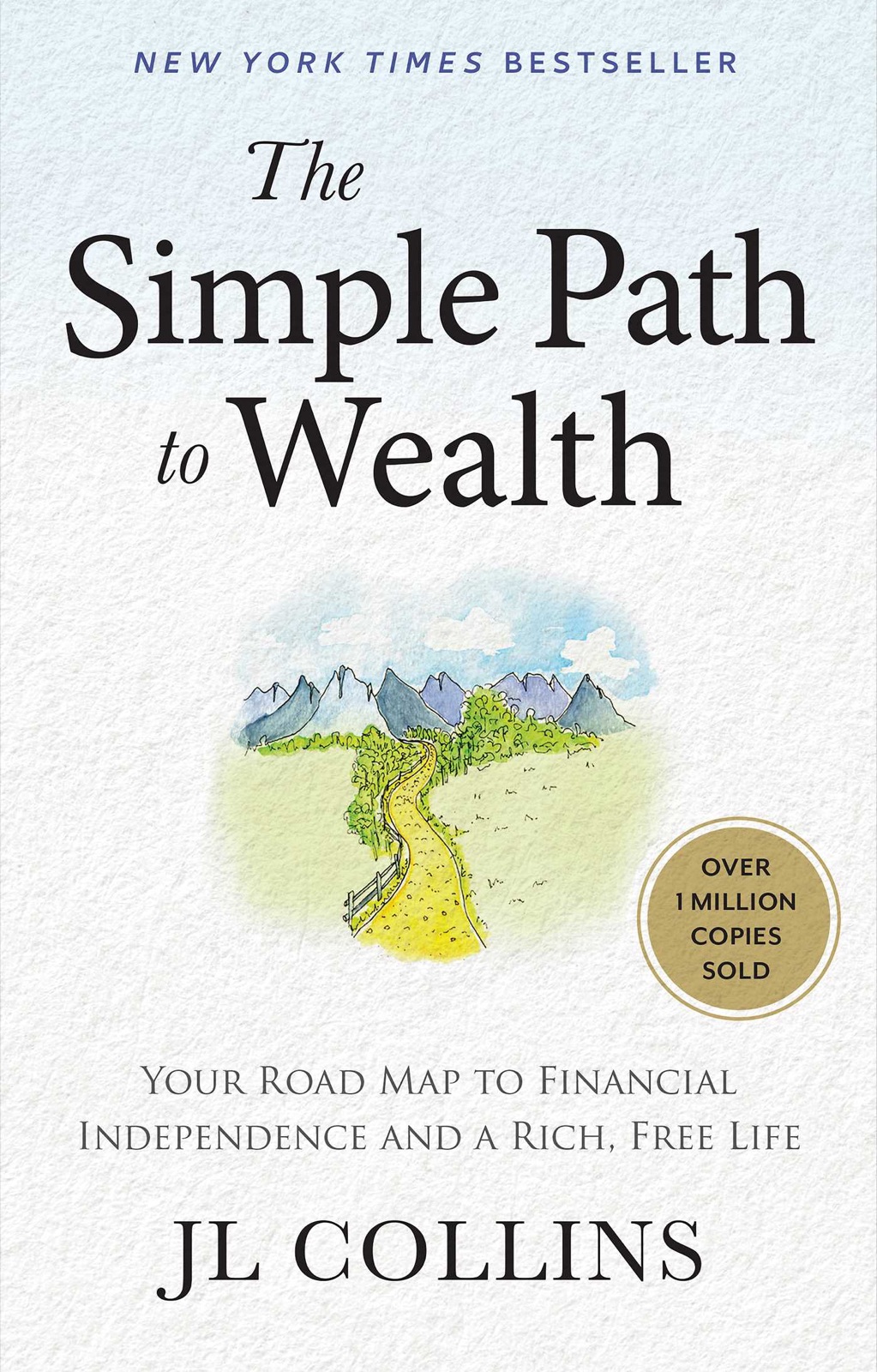
JL Collins wrote The Simple Path to Wealth as letters to his daughter, and its answer fits on an index card. Live below your means, avoid debt, and put the difference into a broad low-cost index fund, month after month, for decades.
One caveat we should name: Collins writes for an American reader, so his specific fund and account names will not map one to one if you live elsewhere. The engine underneath, a broad market fund, low costs and relentless consistency, travels everywhere.
Simplicity has a second payoff: it survives inattention. A one-fund plan still works when life gets busy, which is exactly when complicated plans fall apart.
As retirement gets closer, most people add bonds to smooth the ride. That is a dial to turn later in life, not a reason to delay starting now.
Decoding the jargon on the fund page
Fund pages are written as if to repel beginners. Four terms cover most of what you need.
A tracker or index fund follows a market automatically. Active funds pay managers to try to beat it, and usually charge more for usually less.
The ongoing charge, sometimes labelled OCF or expense ratio, is the yearly fee taken as a percentage of your money. It is the number to minimise.
Accumulating funds reinvest dividends for you; income funds pay them out as cash. Early on, accumulating means one less thing to remember.
An ETF is simply an index fund that trades like a share. For a monthly automated plan the difference barely matters, so buy whichever your platform handles more cheaply.
If a product needs more vocabulary than this to explain itself, that is usually a sign it exists to be sold rather than owned.
Automate it, then stop watching
Set up an automatic transfer that moves money into your investments the day after payday. This one habit beats almost everything else in personal finance.
Automation removes the monthly decision, and with it the temptation to time the market. You buy when shares are expensive and when they are cheap, and you never have to be brave, because you never have to decide.
Increase the amount when your income rises, before your lifestyle catches up. Nudging the transfer up a little each year is painless and compounds into a surprising difference.
Then stop checking. A portfolio glanced at daily looks terrifyingly random. The same portfolio reviewed once a year looks like a slow, steady climb.
If you enjoy watching markets, fine, watch them. Just keep a firewall between watching and acting.
The mistakes that cost more than fees
The biggest dangers in investing are not obscure. They are the same few behaviours, repeated every generation.
Panic selling is the worst. Markets fall, sometimes brutally, sometimes for years, and every long-term chart hides stretches that felt like the end of the world. Selling during one turns a temporary decline into a permanent loss.
Stock picking is the seductive one. It feels like skill and mostly behaves like luck. If you must scratch the itch, cap it at a small slice of your money and treat it as entertainment, not strategy.
Fashion is the expensive one. Every few years a cannot-miss theme arrives. Some themes really do change the world and still lose money for latecomers, because the price already assumed the miracle.
Waiting for the perfect moment is the quiet one. There is always a reason the moment feels wrong: an election, a war, a market at all-time highs. Nobody reliably knows what comes next, which is exactly why time in the market beats timing it.
Checking too often belongs on this list as well. The more often you look, the more often you see a loss, and losses sting harder than equivalent gains feel good. Design your setup so looking is rare.
And one honest note to end on: none of this guarantees anything. Index investing is the strategy with the best odds for ordinary people, not a promise. The risk of loss is real, and it is the price of the returns.
What to do first
This week: make a plan for any expensive debt, and open a savings account for your buffer if you do not have one.
This month: open a low-cost investment account with a reputable broker, inside whatever tax-sheltered wrapper your country offers, such as a stocks and shares ISA in the UK. Pick one broad global or total-market index fund and set up the automatic monthly transfer.
Start with whatever amount you will not miss. The habit matters far more than the size.
If you share your finances with a partner, walk them through the plan once it exists. Money plans survive better when both people understand why the boring fund is the clever choice.
Then read the two books above, in either order. Bogle gives you the evidence and the numbers. Collins gives you the voice in your head for the scary days.
You will not feel like an investor at first. Give it a few years of automatic, boring months, and the balance will quietly become a real number, doing real work while you did something else.